


Long-lasting perfume: Impact on attractiveness and confidence

Almost 60% of young professionals in Central Europe believe that the right fragrance improves the first impression during social gatherings. Choosing a long-lasting niche perfume can transform self-confidence and create a memorable individuality. This article helps you understand which fragrances are truly long-lasting, how they stand out from the rest, and what mistakes to avoid when purchasing.
Contents
- What long-lasting perfume means and common misconceptions
- Types of long-lasting perfumes and key differences
- How long-lasting fragrance works and factors for longevity
- Essential ingredients for long-lasting perfume
- Common mistakes when choosing a long-lasting perfume
Key Takeaways
| Point | Details |
|---|---|
| Fragrance Longevity | A long-lasting perfume maintains its intensity and quality on the skin for an extended period. |
| Factors for Longevity | The concentration of essential oils, chemical composition, and individual skin characteristics influence longevity. |
| Types of Perfumes | Perfumes vary in concentration and longevity, which is crucial when choosing a scent. |
| Common Mistakes | Incorrect fragrance testing and neglecting individual characteristics lead to wrong choices. |
What long-lasting perfume means and common misconceptions
By long-lasting perfume, we mean a fragrance that maintains its intensity and quality for an extended period on human skin. In the context of perfumery, longevity is determined not only by the duration of the scent but also by its ability to retain its characteristic notes without significant dissipation or change.
Surprisingly, many people have misconceptions about the longevity of perfumes. Wrong perceptions about fragrance can lead to poor perfume choices. Some consumers believe that more expensive brands automatically mean a longer-lasting scent, which is not always true. Longevity depends on many factors such as:
- Concentration of essential oils
- Individual skin characteristics
- Chemical composition of the perfume
- External temperature and humidity
- Skin type (oily, dry, normal)
When choosing a long-lasting perfume, it is important to understand that the same fragrance can behave differently on different people. Skin has unique characteristics that influence the spread and retention of the scent. Body temperature, hydration levels, and even diet can alter how a given perfume is perceived and retained.
Professional tip: For maximum perfume longevity, apply it to well-hydrated skin, focusing on pulse points such as wrists, neck, and behind the ears.
Types of long-lasting perfumes and key differences
Perfumes vary significantly in their longevity, which depends directly on their concentration and specific composition. The classification of perfumes by the concentration of aromatic oils determines their longevity and intensity and is a key factor in choosing a fragrance.
The main types of long-lasting perfumes include:
- Perfume (Parfum): The most concentrated type with maximum longevity up to 6 hours
- Eau de Parfum: Moderate concentration with longevity around 4 hours
- Eau de Toilette: Lower concentration with a duration of 2-3 hours
- Eau de Cologne: The lowest concentration with short longevity
Each type of perfume has specific characteristics that affect its ability to retain the scent. The concentration of essential oils is a determining factor, but not the only one. Individual skin characteristics, body temperature, hydration levels, and even diet can significantly alter the perception and longevity of a perfume.
For easier selection of a long-lasting perfume, see the comparison of the main types:
| Perfume Type | Oil Concentration | Average Longevity on Skin | Suitable for |
|---|---|---|---|
| Perfume (Parfum) | Very high (20-30%) | Up to 6 hours | Special occasions, evening |
| Eau de Parfum | Medium (15-20%) | Around 4 hours | Everyday and office use |
| Eau de Toilette | Lower (5-15%) | 2-3 hours | Fresh daytime situations |
| Eau de Cologne | Very low (2-5%) | 1-2 hours | Short meetings and sports |
Professional tip: When choosing a long-lasting perfume, always test the fragrance on your own skin for at least 30 minutes to understand how it will react individually to you.
How long-lasting fragrance works and factors for longevity
Long-lasting fragrance represents a complex chemical process that depends on numerous interconnected factors. Special ingredients with fixative properties play a key role in retaining the base notes on the skin, which determines the duration and intensity of the perfume.
The main factors affecting fragrance longevity include:
- Concentration of aromatic oils: Higher percentage means a longer-lasting perfume
- Chemical composition: Selection of specific notes and components
- Skin type: Different skin characteristics absorb fragrance differently
- Individual characteristics: Body temperature, hydration level, pH balance
- External conditions: Humidity, temperature, and atmospheric influences
Each perfume composition goes through three main phases of development - top, heart, and base notes. It is the base note that determines the true longevity of the fragrance, including heavier molecules that linger longer on the skin. Plant, animal, and synthetic components directly influence the duration and character of the scent.
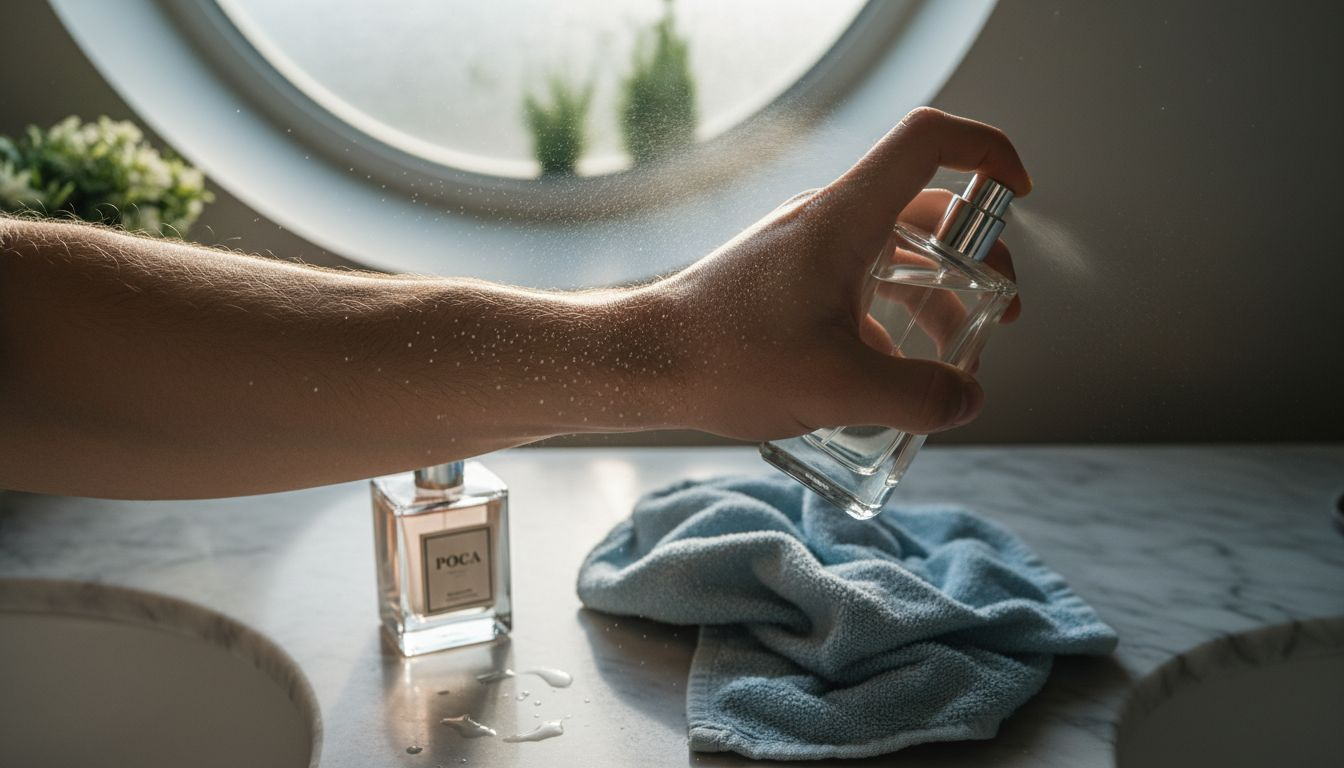
Professional tip: For maximum perfume longevity, apply it to well-hydrated skin and focus on pulse points such as wrists, neck, and behind the ears.
Essential ingredients for long-lasting perfume
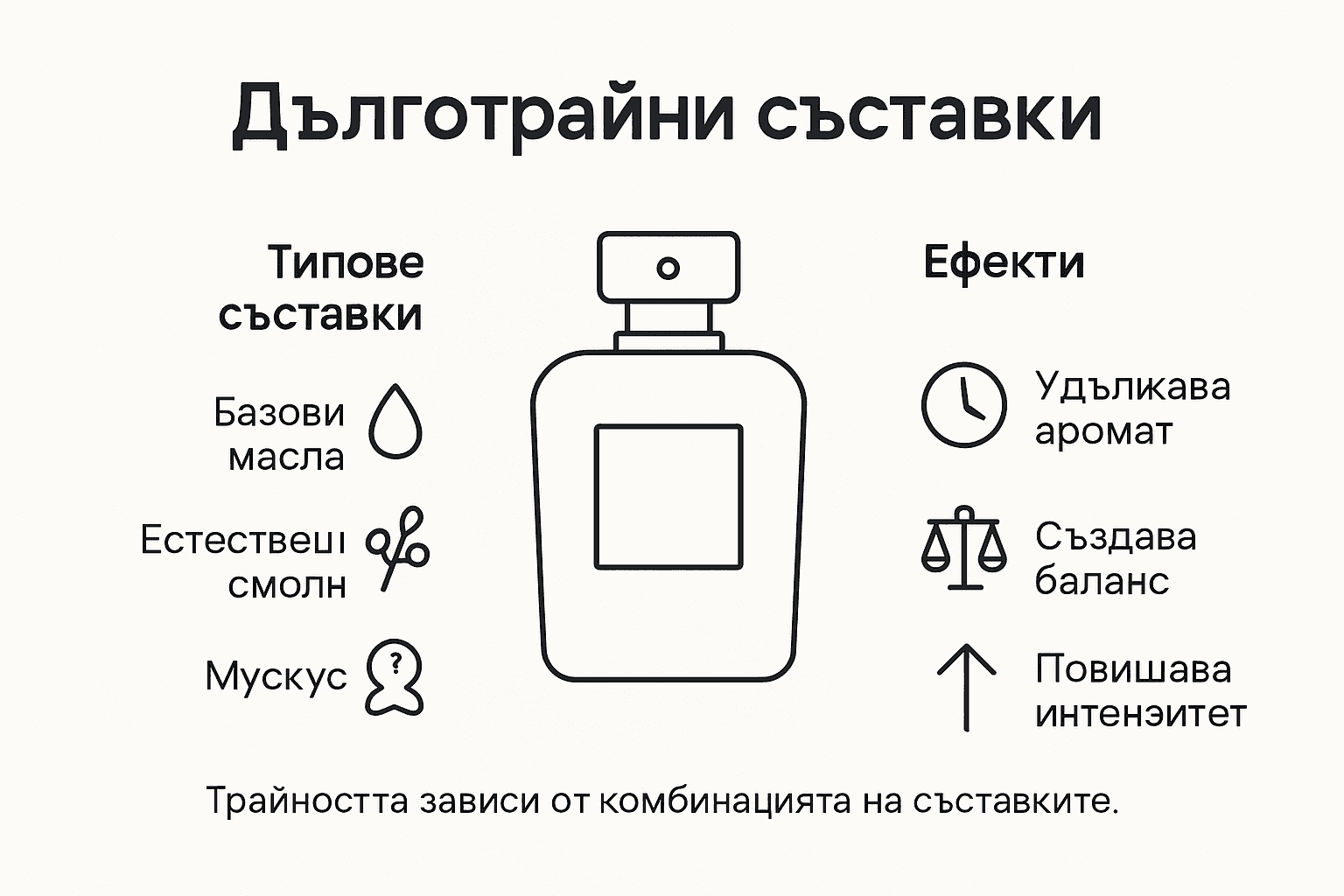
The longevity of a perfume depends directly on its base ingredients, which determine how the fragrance will develop and linger on the skin. Specific fixative components play a key role in achieving a long-lasting and rich fragrance, providing depth and duration to the perfume composition.
The most important ingredients for long-lasting perfume include:
- Musk: A natural fixative with exceptional longevity
- Vanilla: A warm and soft component that extends the fragrance
- Sandalwood: A deep woody note with a lasting effect
- Ambergris: A rich component with excellent fixative qualities
- Vetiver: A root with an intense and long-lasting aroma
These ingredients act as "anchors" for the perfume, slowing down evaporation and allowing the gradual unfolding of its various notes. They not only extend the longevity but also add additional depth and complexity to the fragrance, creating a richer and more intense perfume composition.
Here's how certain ingredients affect the longevity and character of your perfume:
| Ingredient | Primary Effect on Fragrance | Types of Fragrances It Enhances |
|---|---|---|
| Musk | Increases longevity, adds depth | Oriental, woody |
| Vanilla | Imparts softness and warmth | Gourmand, floral |
| Ambergris | Fixes base notes | Oriental, chypre |
| Sandalwood | Adds creaminess, retains scent | Woody, oriental |
| Vetiver | Gives freshness and earthy nuance | Fougère, citrus |
Professional tip: When choosing a perfume, always test how the ingredients react with your individual skin, as each body can modify the fragrance differently.
Common mistakes when choosing a long-lasting perfume
Choosing a long-lasting perfume requires more than a random selection, and many people make serious mistakes that compromise the final result. Ignoring the perfumery pyramid and the fragrance structure is one of the most common mistakes leading to incorrect choices.
The most common mistakes when choosing a perfume include:
- Improper testing: Applying only one fragrance without waiting for its development
- Neglecting individual skin characteristics: Each organism reacts differently to a given fragrance
- Choosing solely by scent in the packaging: Perfume changes significantly after contact with the skin
- Applying too much: Can lead to rapid dissipation of the scent
- Improper storage: Exposure to direct sunlight or high temperatures
It is extremely important to understand that the longevity of a perfume depends not only on its composition but also on the method of application and storage. Body temperature, skin moisture, and even diet can drastically change the perception of a given fragrance. Therefore, experimentation and patience are key when finding the perfect long-lasting perfume.
Professional tip: Always test the perfume on your own skin for at least 30 minutes to understand how it will react individually to you and how its scent will evolve.
Discover the power of long-lasting perfume for your confidence and attractiveness
If you're looking to boost your social attractiveness and confidence through quality, long-lasting fragrances, then in our selection of Pheromante® Collections | Long-lasting and Magnetic Fragrances you will find the perfect combination of intensity and unique character. By using fragrances with proven longevity, you can highlight your style and feel confident in your presence without compromising on quality.
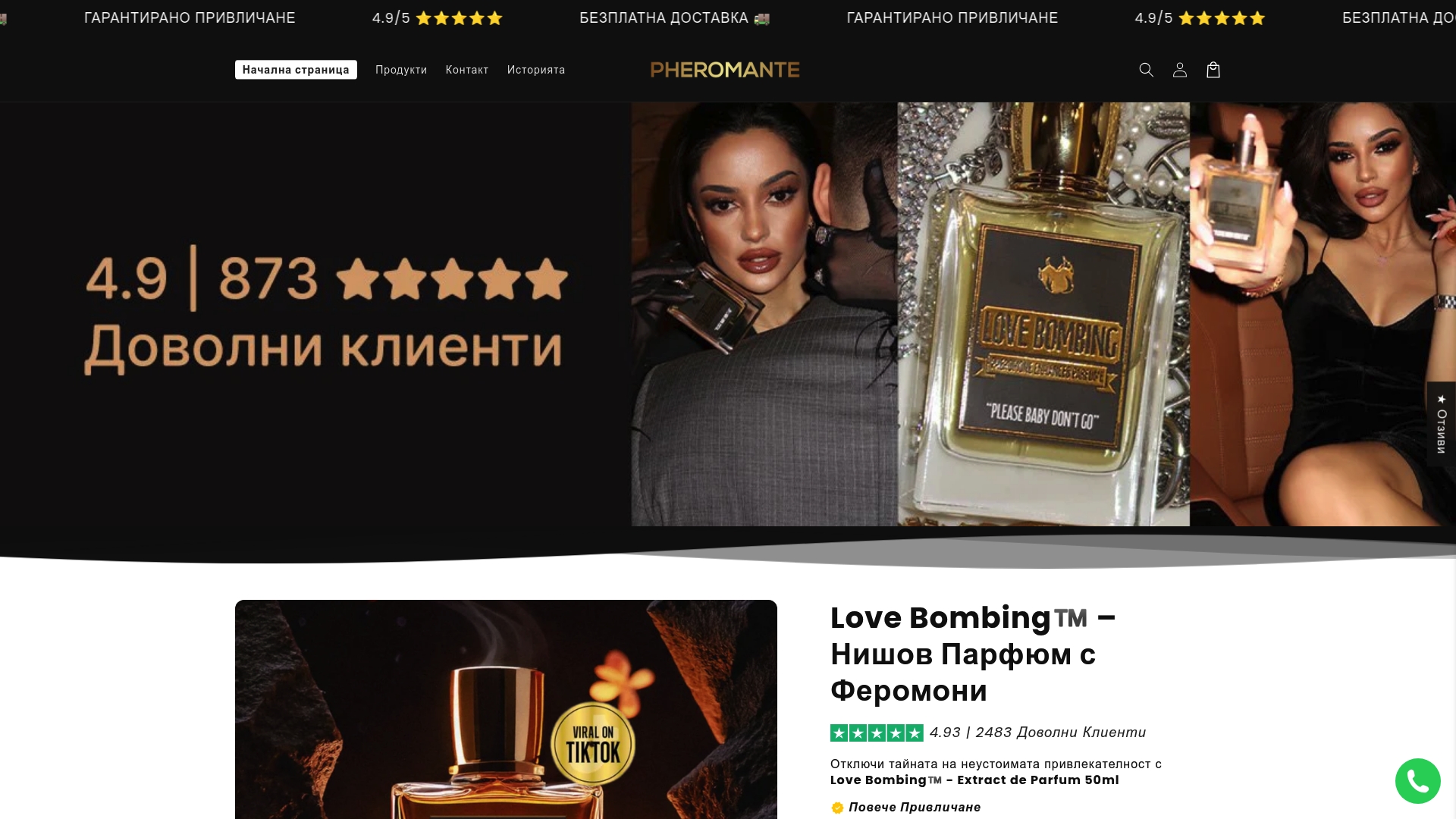
Don't let short-lived and ordinary perfumes disturb the atmosphere around you. Choose a long-lasting perfume with pheromones from pheromante.com, which guarantees you aesthetics and effectiveness with every drop. Feel the difference now and take the first step towards a new level of attractiveness.
Frequently Asked Questions
What is a long-lasting perfume?
A long-lasting perfume is a fragrance that maintains its intensity and quality for an extended period on the skin.
What affects the longevity of a perfume?
The longevity of a perfume depends on the concentration of essential oils, individual skin characteristics, the chemical composition of the perfume, as well as external conditions such as temperature and humidity.
How can I increase the longevity of my chosen perfume?
For maximum longevity, apply the perfume to well-hydrated skin, focusing on pulse points such as wrists and neck.
How to choose the right type of perfume for a long-lasting scent?
When choosing a perfume, it is important to consider the concentration of aromatic oils; perfume (Parfum) has the highest longevity, followed by eau de parfum (Eau de Parfum) and eau de toilette (Eau de Toilette).