


The role of perfume in etiquette: Behavior and attractiveness

Every new encounter is an opportunity to show your best self, even before you utter the first word. In the megacities of Central Europe, social etiquette is more than just a style of dress—it also includes the choice of appropriate perfume, which becomes a "silent ambassador" of your personality. Research highlights that perfume plays a key role in forming a first impression, contributing to attraction and strengthening social bonds. This text shows how intelligently chosen fragrance can work for your confidence and image, leaving no room for mistakes.
Contents
- What perfume means in social etiquette
- Choosing the right scent for the occasion
- The impact of perfume on first impressions
- Rules for applying and quantity of perfume
- Common mistakes in use and how to avoid them
Key Takeaways
| Point | Details |
|---|---|
| Perfume affects perceptions | Perfume is a powerful tool in social etiquette that can shape first impressions. A well-chosen scent can improve social interactions. |
| Moderation is key | Excessive fragrance can provoke negative reactions. Avoid applying more than one or two sprays. |
| Scent selection by occasion | Different situations call for different scents. Determine the appropriate fragrance for a business meeting, an evening event, or sports. |
| Common application mistakes | Applying perfume incorrectly or in the wrong quantity can ruin your impression. Follow the "less is more" rule. |
What perfume means in social etiquette
Perfume is much more than just a pleasant smell. It is an active tool in social life that influences how others perceive you and how connections are formed between people. In the modern world, perfume functions as a silent message you send before you even say the first word. It is part of your "non-verbal communication" and works on a subconscious level, creating impressions that can last long after you've left the room.
The main role of perfume in etiquette is related to showing respect and consideration for others. When you take the time to choose a scent that defines you and ensure it's not overpowering, you show that you value the social context. Perfume has deep cultural significance, serving as a symbol of hospitality, spirituality, and personal expression. In some cultures, the right fragrance is a sign of hospitality and goodwill, while in others it represents status and an established position. In an interview with a potential employer, during business negotiations, or in a casual conversation, perfume silently communicates a part of your personality and professionalism.
It is important to understand that in etiquette, moderation is everything. Excessive fragrance is perceived as a lack of taste and disregard for those around you. There is a fine line between being memorable and desirable, and being a cause of discomfort. Young professionals who have realized this build their fragrant identity, which is distinctive but not intrusive. When you wear perfume responsibly, you actively participate in daily social interaction with respect and style. Over the years, fragrance has remained one of the most delicate, yet most powerful elements of etiquette, because it works with our most emotional senses.
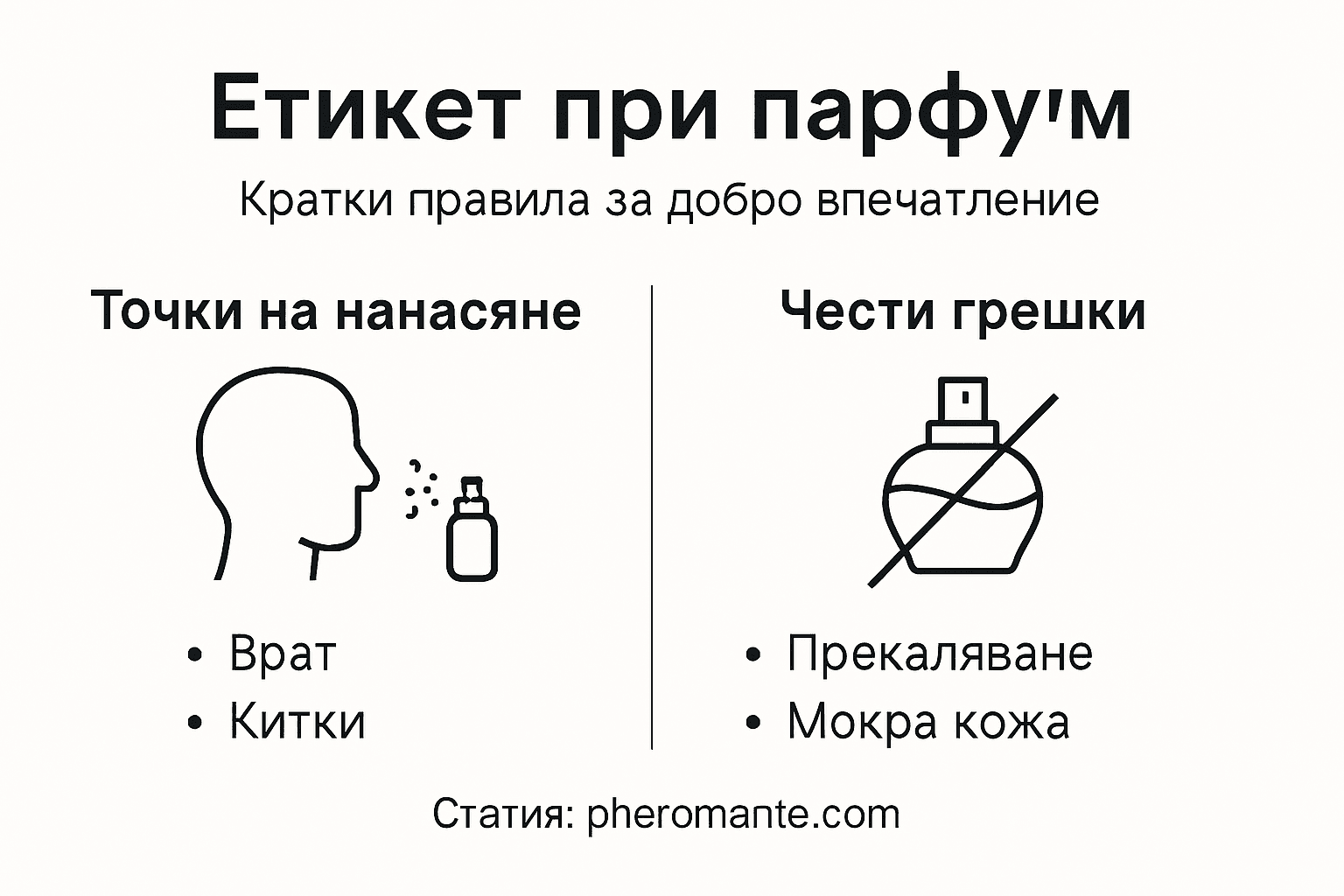
Practical tip Apply perfume to pulse points (neck, inner wrists) about 30 minutes before a social event; one spray for large spaces and two sprays for intimate settings is a good guideline.
Choosing the right scent for the occasion
Finding the ideal fragrance for a specific moment is a skill that develops with time and observation. Every occasion has its own energy, atmosphere, and expectations. A business meeting requires a different fragrance than a romantic evening or a sports training session. The problem many young professionals face is having one perfume and trying to wear it everywhere. This is like wearing one suit for all occasions in your life. Intelligent choice means having a small collection of scents that cover the main social scenarios in your world.
Business environments have their specifics. When you enter an office or a negotiation, the perfume should be delicate and refined, without attracting inappropriate attention. Here, the rule of complexity without excess applies. Fresh, citrus, or musk scents work excellently in a professional context, as they project cleanliness and organization. In partnership with a practical guide to perfuming for different occasions, you will understand how the perception of perfume varies from one format to another. For evening outings or social gatherings, you can allow yourself bolder, deeper fragrances. Oriental or patchouli perfumes create intimacy and style that are perfect when you are in closer proximity to others.
Seasonality plays a huge role in selection. In summer, heavy, cold scents can be stifling, while in winter, fresh notes can sound chilly and inappropriate. Think of it simply: summer scents are like light clothing, and winter ones are like warm hoodies. During warmer months, choose perfumes with top notes that evaporate quickly and maintain a feeling of lightness. In colder weather, allow yourself the warmth of a rich, full-bodied scent that will last longer on skin and clothes.
Let's not forget the context of physical activity. When you go to a workout or sports activity, perfume is not suitable simply because sweat will mask it and create strange combinations. During these times, the perfect alternative is elegant deodorizing or a minimal scent after a shower. But when you are ready for a social activity after sports, a little perfume will subtly suggest that you care about yourself and respect others.
Practical tip Keep three perfumes: one for work and formal events, one for evenings and social gatherings, and one for everyday moments, allowing you to adapt your presentation to the context without hesitation.
Here's how key types of fragrances align with different social situations:
| Occasion | Suitable Fragrance | Reason for Choice |
|---|---|---|
| Business meeting | Citrus, musk | Creates a sense of cleanliness and order |
| Evening event | Oriental, woody | Emphasizes style and intimacy |
| Sports activities | Minimal, fresh | Avoids intrusiveness when sweating |
| Summer daytime meeting | Light, floral | Adds lightness and freshness |
| Winter gathering | Sweet, rich | Lasts longer in the cold |
The impact of perfume on first impressions
A first impression is formed within the first seven seconds. During this brief period, the other person gathers information from your appearance, body language, tone of voice, and yes, your perfume. Scent is one of the most powerful sensory gateways to the brain and creates long-lasting associations that can enhance or detract from how you are perceived. Perfume plays a key role in forming first impressions, influencing through attraction, memory stimulation, and the psychology of scent. It can improve the perception of one's personality and create a strong and positive social connection from the very first meeting. When you appear perfectly dressed, but your perfume is not right for the occasion, it can undermine the entire image and leave a confusing impression.
The problem is that the effect of perfume is not universal. What works for one person in one context may completely fail in another situation. The impact of perfume depends on the context, including the social situation and the scent used, and it can affect both positively and negatively. A heavy oriental perfume, which is wonderful in an evening club, can be suffocating in a small office. The freshness of citrus, which is perfect on a summer day, can sound chilly and inappropriate in winter. The intelligent young professional understands that choosing perfume is like choosing clothes. It must match the occasion and enrich the personal image.
A distinct feature of a first impression is that it is partly unconscious. Other people don't actively think about your perfume, but its subconscious role in their assessment is significant. The brain unconsciously associates scent with personality traits: organization, gentleness, courage, attention to detail. This is why pheromone perfume is so effective in social settings. They complement the natural body odor and enhance the impression of confidence and attractiveness. Young professionals who have understood this see perfume not as a luxury accessory, but as a strategic tool for impression management.
Practical tip Apply one perfume consistently for two weeks to people you see regularly, and observe how their attitude towards you changes after you have integrated it as part of your identity.
Rules for applying and quantity of perfume
The classic mistake is that many people apply perfume incorrectly, and this undermines the entire effect. The quality of the perfume is only half of the equation. The other half is knowing how to apply it to maximize its potential and avoid the social awkwardness of using too much. Many young professionals struggle with the question of how much is enough and exactly where to apply it, leading to wrong decisions. If you do this incorrectly, even the most expensive perfume will seem like a bad choice.
The first rule is simple: less is more. When applying perfume, avoid rubbing wrists, as this breaks down the fragrance molecules and disrupts the perfume's composition. Many people apply perfume and immediately rub it, thinking this distributes it better. Mistake. The correct technique is to spray it about 13 centimeters away from the skin and allow the fragrance to dry naturally. This allows the molecules to remain intact and develop their full characteristics without degradation. Typically, 1 to 2 sprays on pulse points are sufficient for a lasting and pleasant scent that continues throughout the day without being overpowering.
Pulse points are key areas for maximum diffusion. The neck, inner wrists, the nape of the neck behind the ears, and even the hollow between the collarbones are ideal spots. These areas naturally warm the skin, which helps the fragrance evaporate and spread around you more evenly. If you spray on your shoulders or clothes, the perfume will remain localized and won't diffuse naturally. Another important thing is not to spray it directly on your hair, as this can dry it out and leave a scent that clashes with your shampoo.
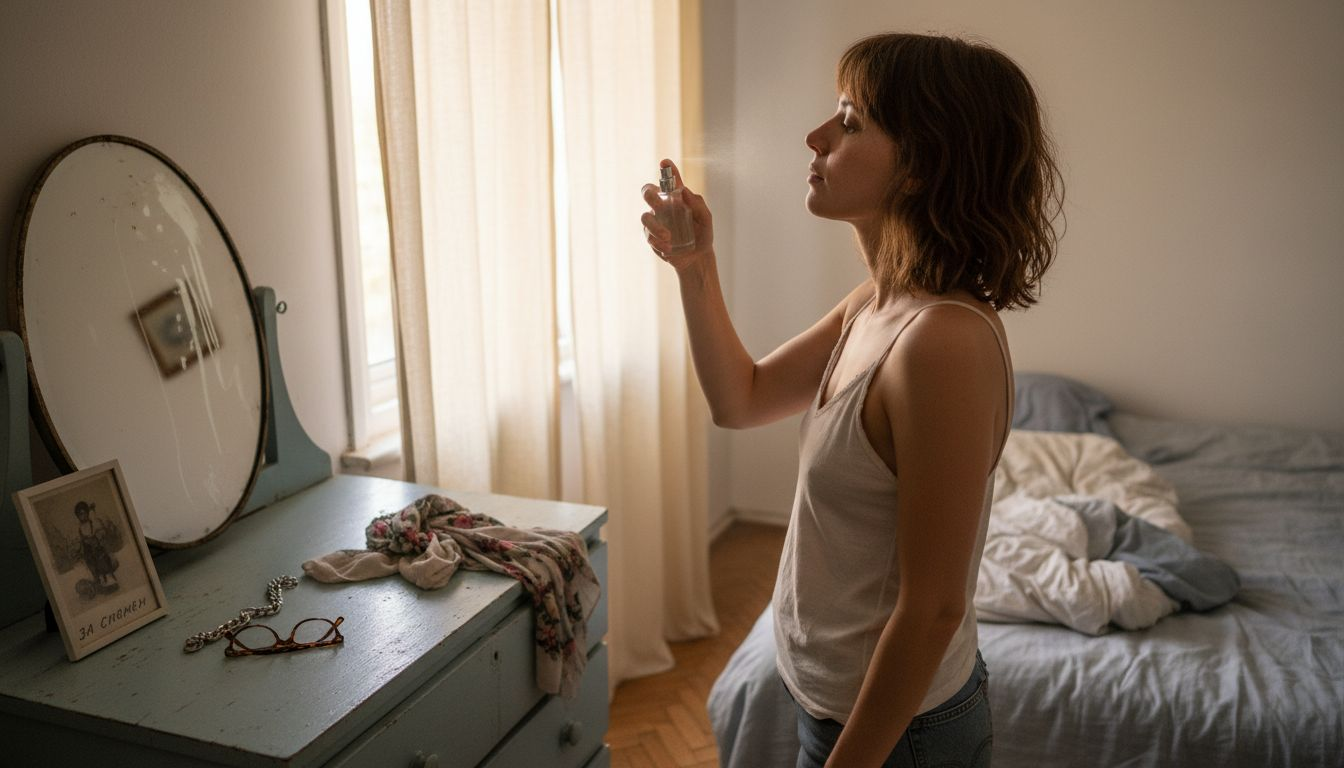
Quantity is the absolute boundary between stylish and awkward. For courtesy, one spray is a good way to start, especially in enclosed spaces. In more open environments, two sprays are acceptable. Every additional spray risks making you memorable in the wrong way. Over the years, perfumers have designed these products so that one spray lasts hours without needing reapplication. Trust the formula and follow the simple rules, and your perfume will work exactly as intended.
Practical tip Apply perfume to your neck or wrists about two minutes before putting on your clothes, allowing it to integrate naturally with your skin's scent before clothing can trap the fragrance.
Common mistakes in use and how to avoid them
Mistakes in perfume application are so common that almost everyone makes them without realizing the consequences. These seemingly small errors can ruin the impression you're trying to create, and even turn potential attractiveness into repulsion. The problem is that no one tells you directly when you're overdoing it with perfume. People simply move away or avoid your proximity. For young professionals who want to strategically manage their impressions, being aware of these mistakes is critical.
The first and most common mistake is over-applying quantity. Many people think that more perfume means longer lasting, but the reality is that anything above a certain limit is perceived as a lack of taste. When perfume is too strong, it overwhelms the space around you and literally makes people uncomfortable. Instead of being an attractive element of your presentation, it becomes a distraction. A second common mistake is applying it to clothes instead of skin. Perfume is designed to work with your skin's chemistry. When you spray it on clothing, it doesn't have that interaction, and the scent remains superficial, strange, and often more intense. A third mistake is using the same perfume all day without variation. Nasal adaptation is a real phenomenon. If you wear one perfume every day, your brain filters it out and you perceive it weakly, while people around you continue to smell it normally. This prompts you to add more and more perfume, which corresponds to mistake number one.
A fourth critical mistake is applying perfume to wet skin or immediately after a shower. Moisture changes how perfume molecules disperse. Instead of evaporating evenly, they spread unevenly, and the scent develops unnaturally. Wait at least five minutes after showering until your skin naturally dries. The fifth mistake is mixing multiple perfumes simultaneously. When you combine perfume with a perfumed lotion or a perfumed spray, you create a chemical warfare on your skin that results in a strange, conflicting smell. Stick to one scent per day.
How to avoid these mistakes
The way to avoid these problems is simple: maintain consistency and simplicity. Study one perfume well before moving on to the next. Learn from the reactions of those around you. If you notice people backing away from you or looking uncomfortable, it's a sign that something is wrong. Listen to the feedback hidden in their body language. Another extremely useful thing is to ask for an honest opinion from someone close to you whom you trust. "How do I smell with this perfume?" is an honest question you should use. On this journey to perfume literacy, avoiding mistakes is as important as finding the right perfume.
Practical tip Always consider one modest spray as your initial dose, and if the scent seems weak after two hours, add half a spray, rather than starting with two or three sprays right away.
Comparison between the most common mistakes and the correct approach to perfume use:
| Mistake | What happens | Correct habit |
|---|---|---|
| Too much spray | Repels others | One or two sprays are enough |
| Spraying on clothes | Strange, strong scent | Spraying on skin |
| Mixing perfumes | Chaotic smell | One perfume per day |
| Applying on damp skin | Unnatural scent development | Waiting for skin to dry |
Discover the power of perfume in social etiquette and behavior
In this article, we explored how important the correct choice and use of perfume is to highlight your individuality and create a positive first impression. If you are looking for a way to boost your self-confidence and social attractiveness through fragrance, pheromante.com offers unique solutions. Our Pheromante® Collections | Long-lasting and Magnetic Fragrances are specially designed to help you build a fragrant identity without compromising etiquette and social context.
Don't leave the choice of perfume to chance during important social moments. Visit pheromante.com now and discover personal pheromone fragrances that emphasize your style and strategic presence. Add confidence every morning and leave a lasting impression wherever you are. The time to stand out is now!
Frequently Asked Questions
What is the main role of perfume in social etiquette?
Perfume plays a key role in social etiquette, serving as a means of communication and showing respect for others. The right fragrance can enhance how professionals perceive an individual's personality and professionalism.
How can I choose the right perfume for different occasions?
It's important to have different perfumes for different situations. For example, for business meetings, choose fresh and musky scents, while for evening gatherings, you can opt for scents that emphasize style and intimacy, such as oriental or woody ones.
How much perfume should I apply so as not to be overbearing?
Usually, one to two sprays on pulse points are enough for a lasting scent that isn't overbearing. Avoid applying excessive perfume, as this can cause discomfort to those around you.
What are common mistakes when applying perfume?
Common mistakes include overdoing the amount of perfume, applying it to clothes instead of skin, and spraying perfume on damp skin. To avoid these problems, follow the "less is more" rule and apply perfume to dry skin.
Recommended
- 7 Top Perfume Ingredients and How They Affect Attractiveness – Pheromante
- 7 Benefits of Pheromones for Increased Attractiveness – Pheromante
- 7 Benefits of Niche Perfumes for More Confidence – Pheromante
- The Role of Perfume: Enhancing Style and Confidence – Pheromante
- Community of fragrance passionates