


Perfume vs. Aphrodisiac: Which boosts attractiveness

The search for a niche perfume with pheromones often comes with questions about its effect and differences compared to traditional aphrodisiacs. In everyday social interactions, small details like fragrance can have a powerful impact on your confidence. Perfumes work through emotions and self-perception, while aphrodisiacs have a direct biochemical effect on libido, according to scientific research. This article will help you make an informed choice by understanding the real mechanisms of action and the power of attractiveness in social life.
Table of Contents
- What distinguishes perfume from an aphrodisiac
- Main types and mechanisms of action
- Pheromones in perfumes – scientific basis
- Impact on self-esteem and social skills
- Risks, safety, and key differences
Key Takeaways
| Point | Details |
|---|---|
| Difference between perfume and aphrodisiac | Perfume influences mood and self-perception through scent, while an aphrodisiac works at a biochemical level, affecting libido and sexual desire. |
| Social attractiveness | Perfume is a powerful tool for increasing social attractiveness, shaping personality and confidence in interactions. |
| Biochemical effects | Aphrodisiacs can have undesirable health effects and are less regulated compared to perfume, which is safe for use. |
| Product choice | For reliable results, perfume is the preferred choice for enhancing attractiveness, as it is a scientifically proven and regulated product. |
What distinguishes perfume from an aphrodisiac
Perfume and aphrodisiac are often confused as the same thing, but they work through fundamentally different mechanisms. Perfume is primarily an aromatic composition that affects your mood and self-perception through the sense of smell. When you inhale perfume, it creates psychological and emotional effects that can boost your confidence, energize you, or even make you more attractive in a social context. Aphrodisiacs, on the other hand, are substances with a direct influence on libido and sexual desire, working through physiological mechanisms such as hormonal regulation or effects on the central nervous system. This basic distinction is key: one fragrance encourages you through feelings, while an aphrodisiac acts at a biochemical level.
When we talk about perfume, we are talking about the art of attractiveness through impression. It works with the psychology of attractiveness, which is complex and individual. Someone feels sexier because they wear a perfume that gives them confidence. It is like a suit for the soul that strongly influences how you interact with others. In practice, many people make assumptions about others based on the scent they perceive, meaning perfume is a social tool for communication. Aphrodisiacs, in contrast, function independently of social perception. They act at a chemical level, stimulating physiological responses. Even if you don't know you've consumed an aphrodisiac, your body will react. Scientific studies show that the emotional and psychological effects of scents can be both conscious and unconscious, but perfume remains primarily a means of self-perception and external presentation.
Let's understand the purpose of each attractiveness tool. Perfume increases attractiveness through three main channels. First, it strengthens your personal energy and social confidence. Second, it creates a sensory experience that others associate with you at a subconscious level. Third, it is a visible sign of self-care and attention to detail. Unlike aphrodisiacs, which have a specific goal (stimulating sexual desire), perfume works as a holistic tool to enhance your overall attractiveness. A specific example: if you go out in the evening with a perfume you like, you will automatically walk with more dignity, you will be confident, and this psychological effect will make a significant difference in how others perceive you. When a person is self-confident, they are naturally more attractive, regardless of whether an aphrodisiac is present or not.
The main difference is also in the mode of action. Perfume is a psychological and emotional experience that you can control and be aware of. Aphrodisiacs work at a biochemical level, affecting the central nervous system and hormonal regulation. To find the ideal perfume, you need to experiment, understand what suits you and how you feel with different scents. This is a process of personal development and self-discovery. The power of perfume is that it is part of your identity, part of how you present yourself to the world. That's why some pheromone perfumes combine the two worlds, adding chemical elements to the psychological effect of the fragrance, but the main driver remains your confidence and how others perceive you.
Here's a comparison of the main differences between perfumes and aphrodisiacs:
| Criterion | Perfume | Aphrodisiac |
|---|---|---|
| Mechanism of action | Influences through smell and psyche | Influences the body biochemically |
| Duration | Persistent psychological effect | Temporary physiological reaction |
| Regulation and safety | Strict cosmetic regulation | Often unregulated additives |
| Main purpose | Social attractiveness | Sexual desire |
Professional tip: Before choosing between perfume and an aphrodisiac, consider your goal. If you are looking to boost your personal energy, social confidence, and feel more attractive on a daily basis, perfume is your choice. Understanding how perfume composition affects emotion will help you find the right scent for you.
Main types and mechanisms of action
When we examine perfumes and aphrodisiacs, we must understand that they operate through different mechanisms. Perfumes work through aromatic molecules that activate the olfactory nerve and send signals directly to the brain's limbic system. This is where emotions, memories, and psychological responses arise. Aphrodisiacs, on the other hand, include a wide range of substances with diverse mechanisms, including plant products, foods, medications, and behavioral stimuli. Some act through hormonal regulation, others through nervous stimulation, and still others work mainly at a psychological level. It is important to realize that there is a significant difference between these two worlds in how they affect your body and mind.
Types and action of perfumes
Perfumes consist of volatile aromatic compounds that disperse into the air or penetrate your skin. The primary mechanism is psychological and sensory. When molecules reach the olfactory epithelium in the nose, they activate receptors that send electrical signals to the brain. This is an experience you can control. If you choose a perfume with a specific composition, it will leave memories and associations with you. Pheromone perfume adds another layer, combining the scent with chemical signals that work at an unconscious level, but still through psychological and social mechanisms.
The three main components of a perfume are top, heart, and base. The top is the initial impression, lasting seconds. The heart is the main message, enduring for hours. The base is the long-lasting effect, remaining throughout the day. Each layer works through different aromatic molecules with varying volatility. When you inhale perfume, it doesn't just scent your surroundings. It affects your confidence, the way you walk, the way you feel in your skin. This is a psychological action that becomes a social force.
Types and action of aphrodisiacs
Aphrodisiacs are far more complex in terms of their mechanisms. Historical forms of aphrodisiacs include plant and animal products, acting through various pathways. Some, like cayenne pepper or ginger, work through physiological stimulation, increasing blood flow and heart rate. Others, like chocolate, contain phenylethylamine and theobromine, which affect neurochemistry and elevate mood. Traditional theories like the “Doctrine of Signatures” have historically served to explain aphrodisiac qualities, though many of them work through a combination of physiological effects and psychological expectations.
The action of aphrodisiacs is divided into several categories. First, there are physiological aphrodisiacs that directly affect blood flow, the nervous system, or hormone levels. Second are psychological aphrodisiacs, which work primarily through expectations and the placebo effect. Third are social and cultural aphrodisiacs, where attractiveness comes from the social context and consequences. The mechanisms vary widely, and this is why one aphrodisiac may work for one person but be ineffective for another. Your personal chemistry, health status, psychological readiness, and cultural beliefs play a large role.
Difference in effectiveness
Perfume works consistently. If you choose a good perfume, it will boost your confidence every time you wear it. The effect is predictable and sustainable. Aphrodisiacs, on the contrary, are much more uncertain. They work through multiple pathways simultaneously, and their effectiveness depends on the context. Someone might react intensely to a certain aphrodisiac, while another person feels nothing. This is the difference between a tool (perfume) and an experiment (aphrodisiac). For your personal attractiveness, perfume is a more reliable choice because it works at a level you can control.
Professional tip: Understanding the mechanisms through which perfumes and aphrodisiacs work allows you to make an informed choice about what you need. If you are looking for guaranteed results in personal attractiveness, perfume is the safer path, as its psychological effect is scientifically proven and easily manageable.
Pheromones in perfumes – scientific basis
Pheromones are chemical substances that our bodies naturally produce for unconscious communication. They are extremely powerful, invisible molecules that influence the behavior and emotional state of other people. Perfumes that contain pheromones or pheromonal components work through a combination of two mechanisms: the scent you consciously perceive, and the chemical signals that act at a subconscious level. The scientific basis of pheromones in perfumes is deep and compelling. Research shows that perfumes with pheromonal components affect brain regions associated with social behavior and sexual attraction. This means that when you wear a pheromone perfume, you're not just making an impression through the scent. You are activating biological mechanisms in the brains of others, making them more receptive to your presence.
How pheromones work at a molecular level
Pheromones function through a specialized organ in the nose called the vomeronasal organ. This is a separate system from regular olfaction. When pheromonal molecules reach this organ, they activate specific receptors that send signals directly to the hypothalamus of the brain. The hypothalamus is the center responsible for sexual desire, aggression, and social dominance. This is why pheromones work so quickly and at such a deep level. They bypass rational thought and act directly on primitive instincts. Pheromone perfumes utilize this mechanism, adding chemical molecules that mimic the body's natural pheromones to enhance your natural attractiveness.
Scientific evidence for the effectiveness of pheromones is strong. Studies show that men wearing pheromone perfumes receive more encouraging signals from women, including body language and verbal communication. Women wearing female pheromone perfumes demonstrate increased sexual confidence and a greater number of positive interactions. This is not a placebo or psychological effect. The scientific mechanisms are biological and measurable. Neurosciences demonstrate specific effects of scents on emotions and behavior, meaning that pheromones in perfumes act at a physiological level, supported by archaeological evidence for the ancient use of fragrances for attraction.
Difference between natural and synthetic pheromones
Your body produces natural pheromones every day. They are almost invisible and imperceptible to the brains of other people, although they work at a subconscious level. Synthetic pheromones in perfumes are created in a laboratory to mimic the structure of natural pheromones. They are concentrated, amplified versions of the natural thing. While natural pheromones can be weak or imperceptible, synthetic versions in perfumes are powerful enough to create a noticeable impression. This is the advantage of using pheromone perfume. You get a guaranteed dose of a substance that works at a biological level, combined with a scent that you genuinely like.
Good pheromone perfumes are formulated so that the pheromones remain on your skin throughout the day, activating the receptors of people around you. Pheromones have no scent of their own. You cannot smell them. But other people will feel their effect on their bodies. This is why pheromone perfumes are so effective at increasing attractiveness. They combine the scent that everyone can perceive with chemical signals that influence subconscious behavior.
Scientific measurements of effectiveness
Scientific research measures the effectiveness of pheromones through several methods. One of the most reliable is the analysis of brain activity using functional magnetic resonance imaging. Under controlled conditions, researchers show that pheromones activate specific brain regions associated with sexual attraction. Another method is social behavioral observation, where positive interactions and sexual advances are monitored in people wearing pheromone perfumes, compared to a control group. The results consistently show an increase in attractiveness and social engagement. The third method is hormonal analysis, which measures the level of oxytocin and other attraction-related hormones after exposure to pheromones. All these methods confirm that pheromones in perfumes indeed affect the brain and behavior.
Professional tip: Pheromone perfumes work best when applied to the pulse points on the wrist, the inner elbow, and the base of the neck, because the body temperature is higher there, which helps the pheromones evaporate and spread. Choose a perfume that combines pheromones with a scent you truly like, because confidence and comfort are key to achieving maximum effect.
Impact on self-esteem and social skills
Perfume is far more than just a fragrance. It is a psychological tool that transforms the way you feel in your own skin. When you wear a perfume you like, you automatically feel more confident. This is no coincidence. Scientific research shows that scents affect brain functions related to emotions, meaning that perfume works directly on your psyche. When you enter a room with a good perfume, you don't just leave an impression on others. You bring an energy that you yourself feel. This is a transformative experience. People who regularly wear perfumes they love demonstrate higher self-esteem, greater social satisfaction, and a better ability to connect with others. Life is different when you feel good about yourself.
Psychological impact and self-esteem
Self-esteem is the foundation of attractiveness. No matter how beautiful the perfume is, if you don't feel good, it won't shine. Perfume acts as a catalyst. It triggers an internal switch that awakens your confidence. When you apply perfume in the morning, you set the tone for the entire day. You feel prepared. You feel attractive. You feel ready to handle any social challenge. This psychological transition is powerful. The difference between a day when you wear a perfume you adore and a day when you don't is enormous. Neuroscientific research reveals that scents activate the limbic system, which is responsible for emotions and motivation. When the olfactory nerve activates this system, you experience a spontaneous surge of positivity and self-confidence.
Furthermore, perfume reduces stress. A number of scientific studies show that certain scents, such as lavender, rose, and lemon, lower cortisol, which is the stress hormone. When stress is lower, your social skills improve significantly. It's easier to talk to new people. It's easier to listen actively. It's easier to participate in conversations without the anxiety that often comes with apprehension. When you are calm and confident, the people around you respond to that energy. They see a person who knows what they want, who is comfortable with themselves. This is the impact of a good perfume.
Increased social attractiveness
Social appeal is more than just physical beauty. It's a combination of confidence, energy, and presence. Aphrodisiacs and fragrances boost social appeal by stimulating confidence and a positive mood, meaning perfume is an active player in your social dynamics. When you wear pheromone perfume, you combine two layers of attractiveness: the conscious scent and the unconscious chemical signal. The result is that people around you react more positively. They feel drawn to you, even if they don't realize why. That's the power of perfume.
In a social context, perfume acts as an invisible force. It reveals your personal energy and makes you more attractive. A woman who enters a room wearing a perfume that radiates sexual confidence receives different treatment from the men around her. A man wearing a powerful, masculine perfume becomes the center of attention in a social setting. This is no coincidence. Perfume works on several levels simultaneously, transforming your presence and how others perceive you.
Developing Social Skills
Social skills are not static. They evolve. Perfume is a tool that accelerates this process. When you feel confident through perfume, you take more risks in social situations. You talk to new people. You initiate conversations. You maintain eye contact longer. Each of these things is practice that develops your social skills. Perfume is like a training partner. It encourages you to step out of your comfort zone because you know you are prepared and attractive.
The cumulative effect is significant. After months of wearing a perfume that gives you confidence, you actually become more socially adept. You have learned to interact with people more naturally. You have developed a social grammar that was previously missing. Your ability to flirt, to communicate, to build connections has improved. Perfume is a catalyst for personal growth that extends far beyond simply wearing a good scent.
Professional Tip: Choose a perfume that not only smells good but also makes you feel truly yourself. Wear it every day when you want to make your best social impression. Observe how people react differently when you wear perfume. This is direct proof that your confidence and attractiveness are increasing.
Risks, Safety, and Key Differences
Perfume and aphrodisiacs are fundamentally different products with different safety profiles. It is critical to understand the difference before deciding which to use. Perfume is a cosmetic product intended for external use. It contains aromatic molecules dissolved in alcohol. When you apply it to your skin, it simply adds fragrance and affects your psyche through smell. Aphrodisiacs contain active substances with biological effects that may carry health risks. They are designed to alter libido through physiological mechanisms. This means that aphrodisiacs work internally on the body, affecting hormones and the central nervous system. This is a fundamental difference in how they work and their safety.
Perfume Safety
Perfumes are generally safe. They are regulated as cosmetic products in most countries, meaning they must meet strict standards for quality, purity, and safety. When you buy perfume from a reputable source, you can be sure it is safe to use. The only real risk is an allergic reaction to certain aromatic compounds. Therefore, people with sensitive skin should test perfumes on a small area before full use. But in general, perfumes are absolutely safe.
Good quality pheromone perfumes are also safe. The pheromones added are synthetic versions of natural pheromones that your body already produces. They do not cause internal chemical reactions that alter your physiology. They act on the skin and through aromatic molecules that activate the receptors of other people. There is no significant health risk from wearing pheromone perfume. It is simply an enhanced version of the natural mechanism of attraction.
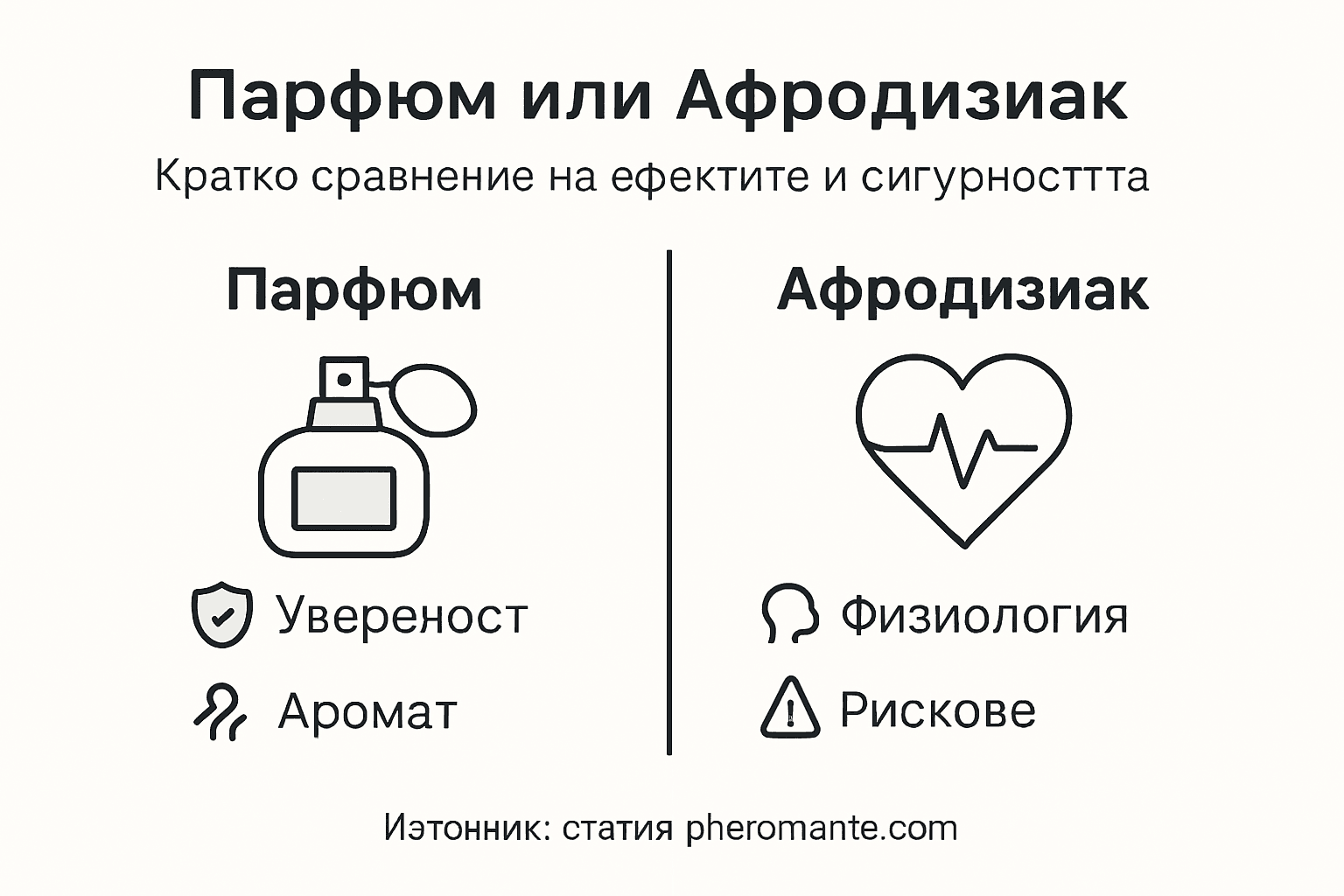
The main risks and safety advantages for both types of products are summarized here:
| Aspect | Perfume | Aphrodisiac |
|---|---|---|
| Side effects | Possible skin allergy | Potential health risks |
| Quality control | Guaranteed by law | Often varies, weak regulation |
| Possible interactions | Absent | May interact with medications |
| Recommendation | Suitable for everyday use | Only with medical consent |
Risks of Aphrodisiacs
Aphrodisiacs are more complex in terms of safety. Many of them contain active plant compounds or chemicals that affect the central nervous system. For example, some aphrodisiacs contain substances that increase blood flow, increase heart rate, or alter hormonal balance. This means they can have undesirable effects. People with blood problems, hypertension, or heart disease should be cautious. Some aphrodisiacs can interact with medications, creating unwanted combinations.
The problem with aphrodisiacs is that their safety is unregulated. Many of them are traditional products or supplements that do not undergo strict regulation. Quality varies significantly. An aphrodisiac from one manufacturer may contain completely different substances from the same product from another manufacturer. This creates uncertainty. No one knows exactly what is in the product and what unwanted effects may occur. For some people, an aphrodisiac may work wonderfully. For others, it can create problems.
Key Differences in Regulation and Responsibility
Perfumes are classified as cosmetic products. Cosmetic manufacturers are responsible for product safety and quality. They must document ingredients, conduct testing, and meet strict standards. Aphrodisiacs are substances intended to alter libido through active biological substances, which places them in a different legal category. In many places, they are not as well regulated as cosmetics. This means less manufacturer responsibility, less testing, and greater uncertainty for the consumer.
That is why perfume is a safer choice for enhancing attractiveness. It is a cosmetic product with a clear safety profile. It does not cause physiological changes that pose health risks. Aphrodisiacs can be effective, but come with unknown risks and potential side effects. For someone looking for a reliable way to enhance their attractiveness, perfume is the logical choice.
How to Choose Safely
If you still decide to experiment with aphrodisiacs, be smart. Research the product before you buy it. Read reviews. Check the ingredients. If you have any health conditions, consult a doctor before use. A starting dose is always safer than a full dose. Monitor your body for side effects. And most importantly, buy from a reputable source, not from random internet sites.
For perfumes, the rule is simple: buy from renowned brands or stores. They are safe and will deliver results. There are no hidden risks. There are no unforeseen effects. Only the purity of the scent and the power of the psychological effect.
Professional Tip: If you're choosing between perfume and an aphrodisiac, choose perfume. It is proven safe, regulated, and effective. Aphrodisiacs are unpredictable and potentially dangerous. Invest in a quality pheromone perfume instead.
Boost Your Natural Attractiveness with Perfumes That Work
The pursuit of increased personal confidence and social attractiveness is a topic that always excites. In this article, we examined the key difference between perfumes and aphrodisiacs as means of attraction. If you are looking for a solution that gives you control, safety, and a long-lasting psychological effect, pheromone perfumes are a proven tool that combines scent and an unconscious chemical signal.
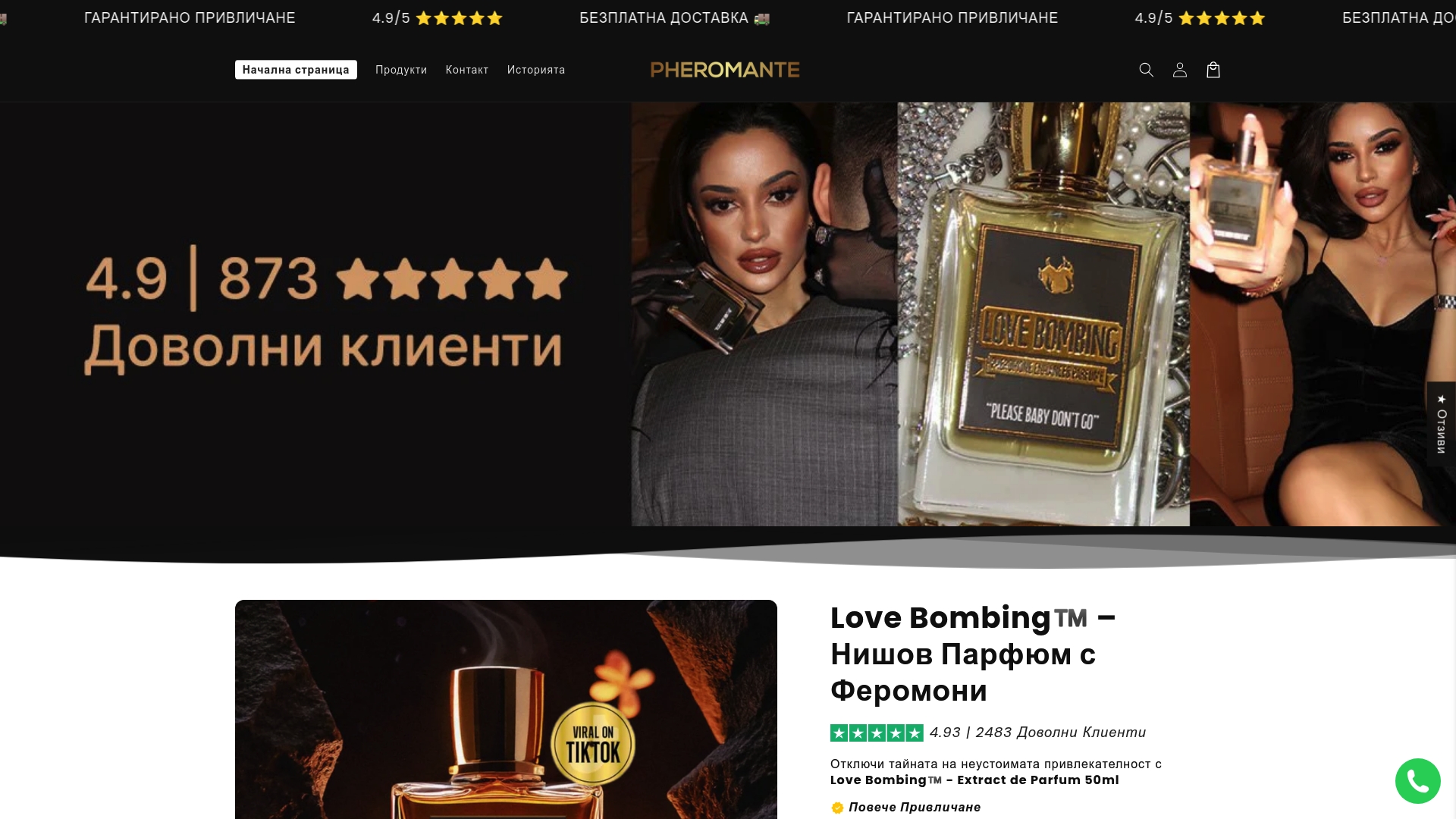
In the online store pheromante.com you will find a selection of Pheromante® Collections | Long-lasting and Magnetic Fragrances specially created to boost your attractiveness and social confidence. Invest in a quality fragrance that brings you comfort and a sense of power from the first use and see how it changes the way you perceive yourself and how others perceive you. Visit the site now and start your transformation to a better version of yourself.
Frequently Asked Questions
What is the main difference between perfume and an aphrodisiac?
Perfume is an aromatic composition that affects mood and self-perception through scent, while an aphrodisiac is a substance that directly stimulates libido and sexual desire at a biochemical level.
How does perfume enhance my attractiveness?
Perfume strengthens personal energy and social confidence, creating positive associations and impressions in others.
How do aphrodisiacs affect the body?
Aphrodisiacs work through biochemical mechanisms, affecting hormones and the central nervous system, stimulating physiological responses that increase sexual desire.
Can pheromone perfumes improve my attractiveness?
Yes, pheromone perfumes work at a subconscious level and activate biological mechanisms in the brains of others, which can increase attractiveness and social interaction.
Recommended
- 7 top perfume ingredients and how they affect attractiveness – Pheromante
- 7 key benefits of personalized perfume for confidence – Pheromante
- Why we trust perfumes – Impact and confidence – Pheromante
- 7 advantages of pheromones for higher attractiveness – Pheromante
- Why Fragrance‑Free Skincare: Why It's Worth Choosing | B Woman