


How to test a new perfume: Technique, effects, and selection

More than 60 percent of young people in Central Europe share that the right perfume gives them additional confidence in social situations. Discovering a new, unique fragrance can genuinely change how others perceive you, and choosing a niche perfume becomes a personal statement. Here, you will learn how to actually test a perfume to discover your own style and individual presence.
Table of Contents
- What it means to test a new perfume
- Types of perfumes and the role of pheromones
- Correct technique for testing fragrances
- Influence of skin and environment
- Common mistakes when testing
Key Takeaways
| Point | Details |
|---|---|
| Testing fragrances | Apply perfume to pulse points and wait 15-30 minutes for the full development of the fragrance. |
| Influence of individuality | Each fragrance reacts differently with the skin depending on pH, temperature, and personal factors. |
| Types of perfumes | Be aware of the differences in concentration and longevity between perfumes, such as Eau de Parfum and Eau de Toilette. |
| Common mistakes | Avoid testing more than three fragrances at once, as your sense of smell can become overwhelmed. |
What it means to test a new perfume
Testing a new perfume is an art that requires more than simply spraying a fragrance on the skin. It is a process of scientific and aesthetic understanding through which you can determine the true essence and individuality of a given scent profile.
Proper testing involves several key steps. First, apply the perfume to the so-called pulse points – wrists, neck, behind the ears, where the skin temperature is higher and helps in the gradual revelation of the fragrance. It is important to wait at least 15-30 minutes because the perfume goes through different phases – top, middle, and base notes – which change and develop over time.
The main goal of testing is to understand how a particular perfume reacts with your individual skin, as each fragrance can smell differently on different people. The ingredients interact differently depending on the skin's pH level, body temperature, and even diet. European safety regulations emphasize the importance of preliminary testing for allergic reactions and personal tolerance.
When testing, you should pay attention to the development of the fragrance over several hours – how the scent changes from its initial spray to its final form after a few hours. Some perfumes have surprising transformations that you can only appreciate through careful and patient testing.
Professional tip: Before purchasing a full bottle, always try the perfume on your skin at least twice at different times of the day to understand its true behavior and compatibility with your individuality.
Types of perfumes and the role of pheromones
Perfumes represent an extremely diverse world of aromatic compositions that can be classified according to their concentration, origin, and specific effects. The main types include perfume (the most concentrated variant), eau de parfum, eau de toilette, and eau de cologne, each differing in intensity and longevity of the fragrance.
Here is a comparison of the main types of perfumes and their longevity:
| Perfume Type | Essence Concentration | Typical Scent Life | Recommended Use |
|---|---|---|---|
| Perfume (Extrait) | 20-40% | 8-12 hours | Evening events, special occasions |
| Eau de Parfum | 15-20% | 6-8 hours | Daily wear |
| Eau de Toilette | 8-15% | 4-6 hours | Office, summer |
| Eau de Cologne | 2-5% | 2-3 hours | After sport, refreshment |
Particularly interesting are perfumes containing pheromones – chemical substances with exceptional properties for subconscious attraction. Pheromones work at a molecular level, activating specific receptors in the brain that are associated with emotional and sexual intimacy. They are almost invisible chemical messages that can trigger unconscious reactions of attraction between people.
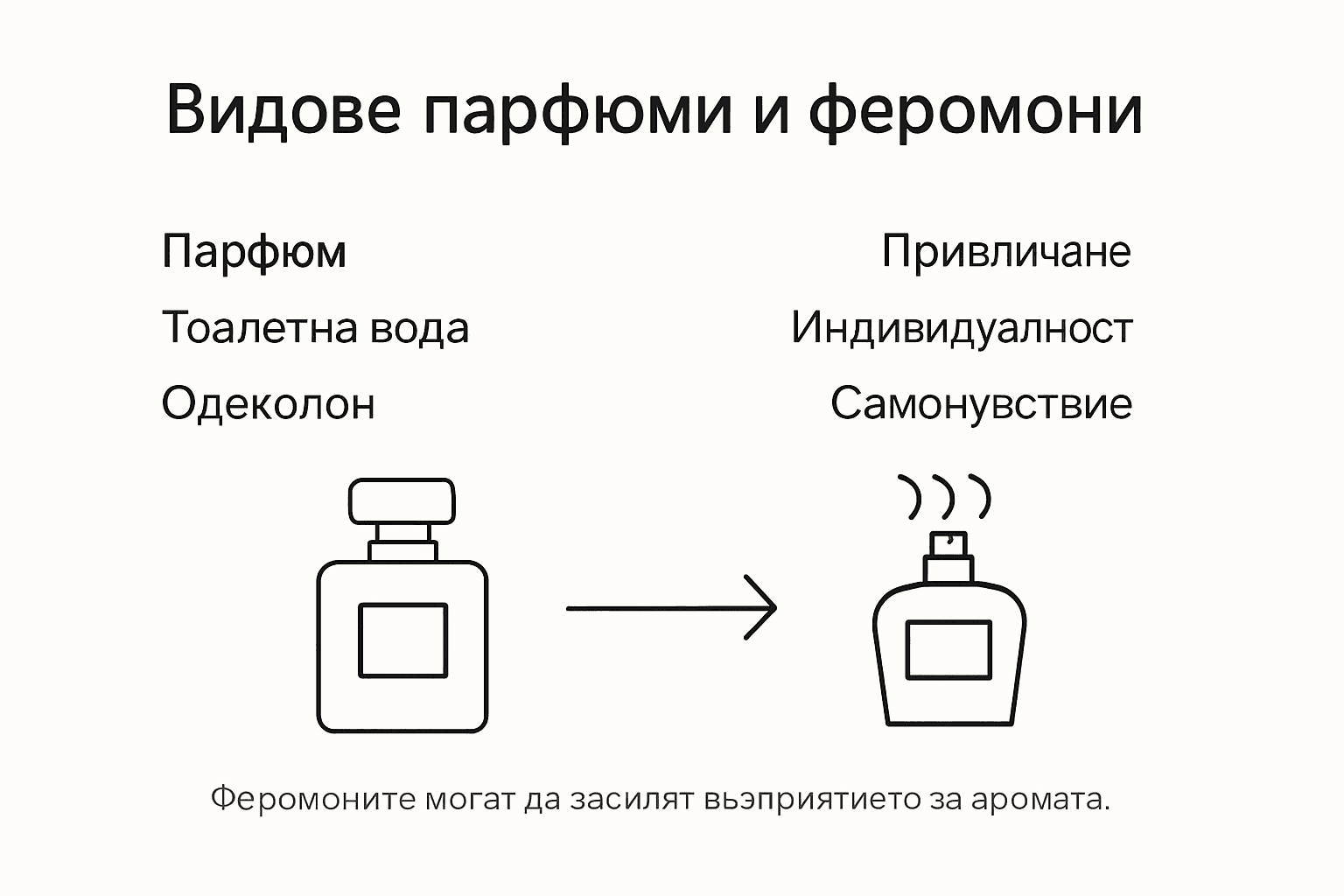
Different perfumes are created with different fragrance families – floral, oriental, woody, fresh, citrus, and chypre. Each of these families has a specific effect on perception and the emotional state of a person. For example, oriental perfumes are warmer and more alluring, while citrus ones are lighter and more refreshing.
In addition to classic perfumes, there are also specialized variants with pheromone additives, which are designed to enhance natural attractiveness. These perfumes combine classic aromatic notes with chemical substances that can provoke subconscious reactions of interest and intimacy.
Professional tip: When choosing a perfume, always test how the fragrance interacts with your individual skin first, because the same perfume can smell differently on different people.
Correct technique for testing fragrances
Testing perfume is a delicate art that requires a specific approach and understanding of aromatic nuances. The correct technique begins with choosing appropriate pulse points on the body – wrists, neck, behind the ears, the inner side of the elbows, where the skin's warmth helps in the gradual revelation of the fragrance.
There are several key steps in testing. First, apply the perfume lightly, without rubbing, because friction can alter the chemical composition of the fragrance. Wait at least 15-30 minutes to go through the different phases of the fragrance – top, heart, and base notes. It is important not to test more than three different perfumes at once, as your sense of smell can become overwhelmed.
Special attention should be paid to the interaction between the perfume and your individual skin. Each fragrance behaves differently depending on the skin's pH level, body temperature, diet, and even emotional state. Therefore, it is important to wait for the full development of the fragrance and evaluate it objectively.
Over several hours, observe how the scent transforms and changes. Some perfumes have surprising transitions from their initial spray to their final form, which may reveal their true character only after several hours of wear.
Professional tip: When testing a new perfume, do so at different times of the day and under various emotional states to understand its full potential and individual impact.
Influence of skin and environment
Every perfume is a complex chemical composition that enters into a unique interaction with individual skin and the surrounding environment. The individual pH balance of the skin can drastically alter the perception of the fragrance, meaning that the same perfume will smell differently on different people.
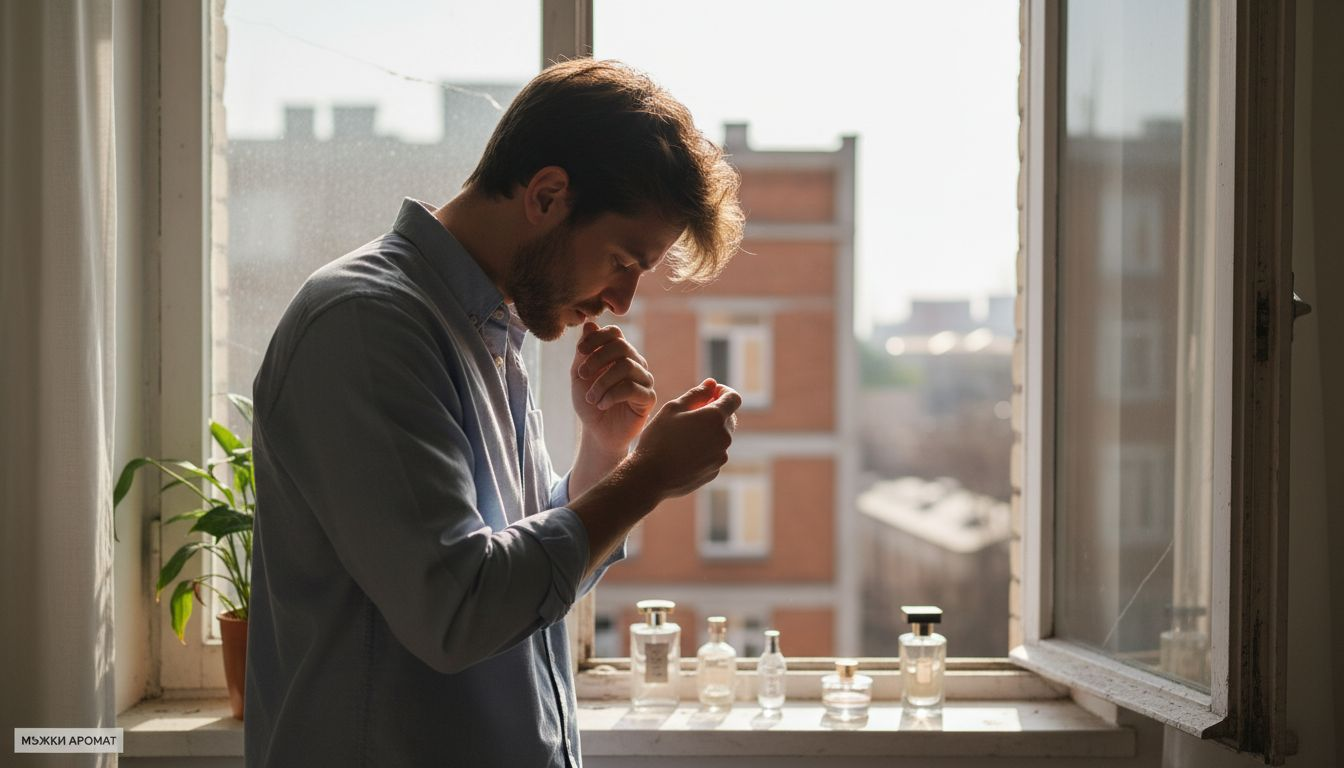
Key factors influencing the fragrance include body temperature, humidity, perspiration levels, and even diet. The warmth of the skin gradually breaks down the perfume ingredients, creating a specific aromatic evolution. Higher temperatures accelerate evaporation and can make the fragrance more intense and dissipate faster.
Comparison of factors influencing fragrance development on the skin:
| Factor | Influence on fragrance | Practical advice |
|---|---|---|
| Body temperature | Accelerates evaporation | Apply lightly to warm areas |
| Skin pH | Changes intensity and notes | Test on your own skin |
| Air humidity | Slows down or speeds up longevity | Consider the season |
| Diet | Can enhance/alter the scent | Avoid spicy foods before testing |
Dermatological studies show that the environment plays a critical role in the perception of perfume. Factors such as atmospheric pressure, temperature, humidity, and even pollution can affect the chemical structure and scent experience. For example, in a more humid environment, perfume molecules diffuse differently than in a dry space.
Environmental conditions significantly impact the longevity and quality of perfume. It is advisable to store your perfumes away from direct sunlight, at a constant room temperature, and protected from sudden temperature changes, which ensures the preservation of their original qualities.
Professional tip: Store your perfumes in closed, opaque bottles at a temperature between 15-18 degrees Celsius, away from direct sunlight, to preserve their intensity and quality.
Common mistakes when testing
When testing perfumes, there are several classic pitfalls that can compromise the overall perception of the fragrance. Hasty evaluation is one of the most common mistakes, where people draw conclusions immediately after the initial application, without waiting for the full development of the aromatic notes.
One of the most common mistakes when choosing a perfume is testing too many fragrances at once. The human sense of smell quickly becomes overwhelmed and loses its ability to differentiate subtle nuances, which can lead to incorrect conclusions. It is advisable to test a maximum of two to three perfumes within a day, taking a break between tests and neutralizing your sense of smell with neutral scents like coffee or water.
Another significant mistake is testing on clothes or paper testers, instead of directly on the skin. Each perfume enters into a specific chemical interaction with the individual pH balance of the skin, creating a unique fragrance. Clothes and paper testers cannot convey the true essence of the perfume, as they lack the warmth and biological activity of human skin.
Furthermore, many people make the mistake of rubbing the perfume immediately after application, which can disrupt its chemical structure. The correct approach is gentle patting or allowing the fragrance to absorb naturally, without additional rubbing. It is important to remember that perfume is a delicate composition that requires careful and precise treatment.
Professional tip: Before investing in a Full Size bottle, always get sample testers and try the perfume at least twice under different conditions to get a realistic idea of its behavior.
Discover the perfect perfume with confidence and style
Testing a new perfume requires attention to detail and an understanding of the individual characteristics of the skin and fragrance. If you want to avoid common mistakes and find a fragrance that truly highlights your uniqueness and enhances your attractiveness, Pheromante® Collections | Long-lasting and Magnetic Fragrances are created just for you. Here you will find carefully selected perfumes with pheromones that combine quality ingredients with scientific discoveries about subconscious influence.
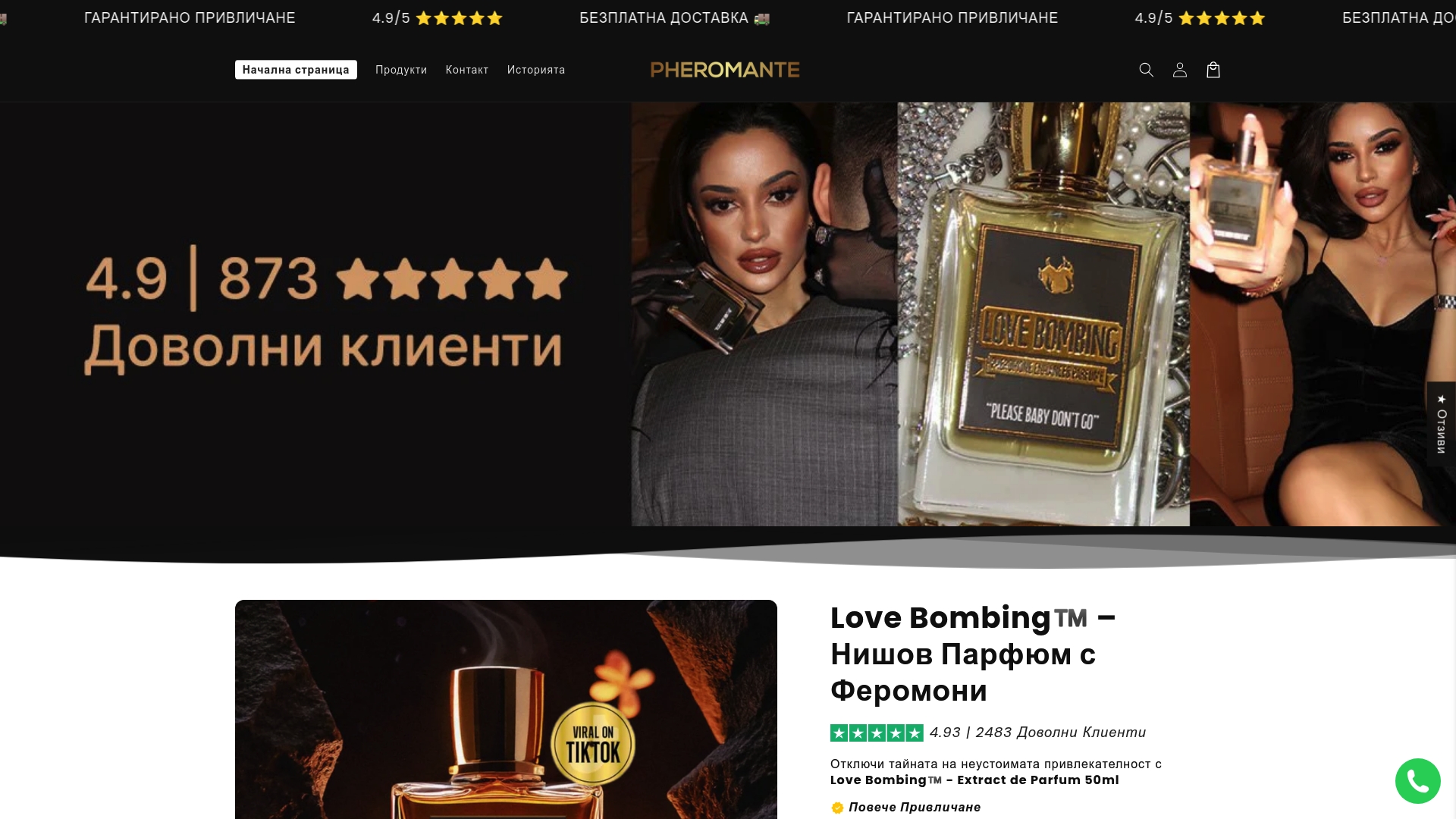
Don't waste time and energy on endless experiments – trust the experts at pheromante.com and choose a fragrance that develops harmoniously on your skin and creates an unforgettable impression. Take a step towards boosting your self-confidence and social attractiveness now. Explore our carefully crafted offerings and discover your new magnetic fragrance.
Frequently Asked Questions
How should a new perfume be tested?
Testing a perfume involves applying it to pulse points, such as wrists and neck, and waiting at least 15-30 minutes to experience the different notes.
What are the main types of perfumes and what distinguishes them?
The main types of perfumes are: perfume (Extrait), eau de parfum, eau de toilette, and eau de cologne, each having a different concentration of essence and fragrance longevity.
What is the influence of skin on the perfume's fragrance?
The skin's pH balance, body temperature, and humidity affect how the perfume develops and smells, as each fragrance reacts differently with individual skin.
How can I avoid common mistakes when testing perfumes?
Avoid testing more than three fragrances at once, do not rub the perfume immediately after application, and wait for its full development before evaluation.