


The Quality of Perfume – How to Recognize It

Every second person admits that choosing the right perfume is a confusing task. With an abundance of scents, concentrations, and glamorous labels, the market often creates more questions than answers. The quality of a perfume does not depend solely on its price or popularity, but on carefully selected ingredients and precise technology. Here you will discover which factors truly distinguish a good European or French perfume and how you can make an informed choice that matches your style.
Contents
- What determines perfume quality
- Main types and concentrations of fragrances
- Key indicators for a long-lasting and strong scent
- Role of ingredients and production technology
- Common mistakes when choosing perfume online
Key takeaways
| Point | Details |
|---|---|
| Fragrance Quality | Determined by composition, concentration, and origin of ingredients. |
| Concentration of perfume oils | A higher percentage of oils ensures a longer-lasting fragrance. |
| Fragrance testing | Before purchase, testing the perfume on the skin is important to reveal its true essence. |
| Choosing fragrance type | Knowing the categories (cologne, eau de toilette, perfume) helps in making an informed choice. |
What determines perfume quality
The quality of a perfume is determined by a multitude of professional and scientific criteria that form its overall aesthetic and functional value. The first and most important factor is the fragrance composition, which includes the precise selection of essential oils, synthetic ingredients, and natural extracts. Master perfumers create complex scents by combining different notes—top, middle, and base—which interact with each other and evolve on human skin.
The second critical element is the concentration of perfume ingredients. The higher the percentage of perfume oil, the longer-lasting and more intense the fragrance will be. Professional perfumes usually contain between 15% and 40% perfume oils, which directly affects their longevity and quality. Androstenone pheromone perfumes, for example, rely on the precise concentration of active ingredients.
The third determining factor is the origin and quality of raw materials. High-quality perfumes use natural extracts from rare flowers, resins, and spices from specific regions around the world. These exclusive ingredients undergo a strict selection and processing process, which guarantees their purity and intensity. Additional criteria include the stability of the fragrance, its longevity on the skin, and its ability to develop gradually.
Pro tip - Quality testing: Before purchasing a perfume, apply it to your wrist and wait at least 30 minutes. The true quality of the fragrance is only revealed after it interacts with your individual body heat and chemistry.
Main types and concentrations of fragrances
Perfumes are classified according to their concentration of aromatic essences, which determines their intensity, longevity, and method of use. There are several main categories, ranging from the lightest to the most concentrated, each with unique characteristics and applications.
The first and lightest category is Eau de Cologne. It contains between 2% and 4% perfume oils and is ideal for people who prefer light, fresh scents. Why people fall in love with smells is more related to the complex perception of smells than to their concentration.
The second type is Eau de Toilette, which contains between 5% and 15% perfume oils. This type of fragrance is more intense than Eau de Cologne and is suitable for everyday use, providing a pleasant scent for about 3-4 hours. They are versatile and most common among consumers due to their accessibility and moderate price.
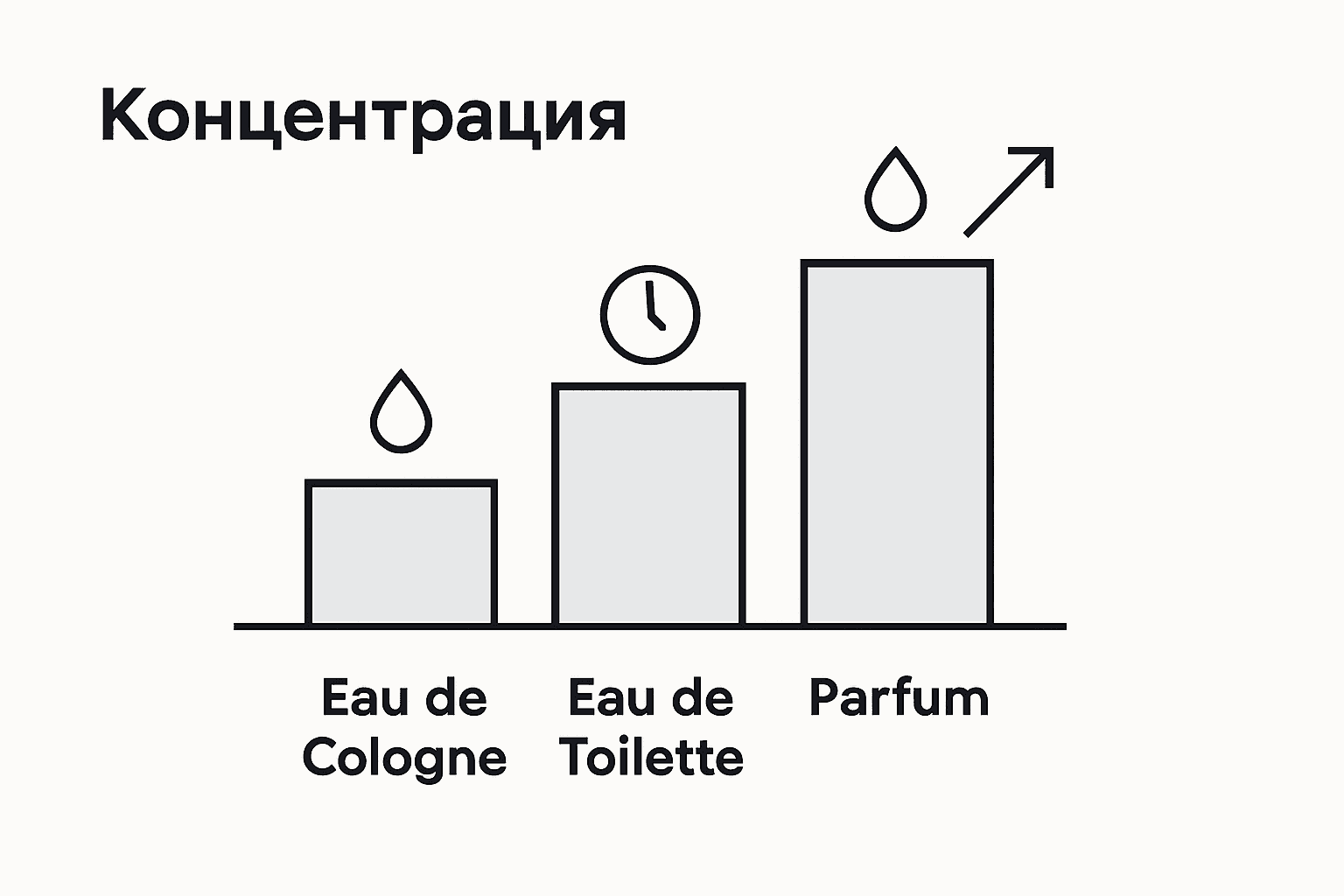
The most concentrated and luxurious option is Parfum, which contains between 20% and 40% perfume oils. This category offers the longest-lasting fragrance, which can last up to 24 hours on the skin. Parfums are the most expensive, but also the highest quality, using the finest and rarest ingredients.
Pro tip - Choosing a fragrance: When choosing a perfume, always test first how it will react with your individual skin, as each fragrance can smell differently depending on your body temperature and chemistry.
Below you will find a comparison of the main types of fragrances according to their concentration and recommended use:
| Fragrance Type | Oil Content | Fragrance Duration | Ideal Use |
|---|---|---|---|
| Cologne (Eau de Cologne) | 2–4% | 1–2 hours | Quick refreshment, summer |
| Eau de Toilette | 5–15% | 3–4 hours | Daily use |
| Perfume (Parfum) | 20–40% | Up to 24 hours | Special occasions, evening outings |
Key indicators for a long-lasting and strong scent
The longevity of a perfume depends on many interconnected factors that perfumery professionals carefully balance. Of primary importance is the quality of the ingredients used, which determines how the fragrance will develop on the skin and how long it will retain its intensity.
A key indicator is the scent composition - its structure of top, middle, and base notes. Why people fall in love with smells, not faces reveals that the perception of scent is extremely complex and depends not only on the chemical composition but also on individual perception.
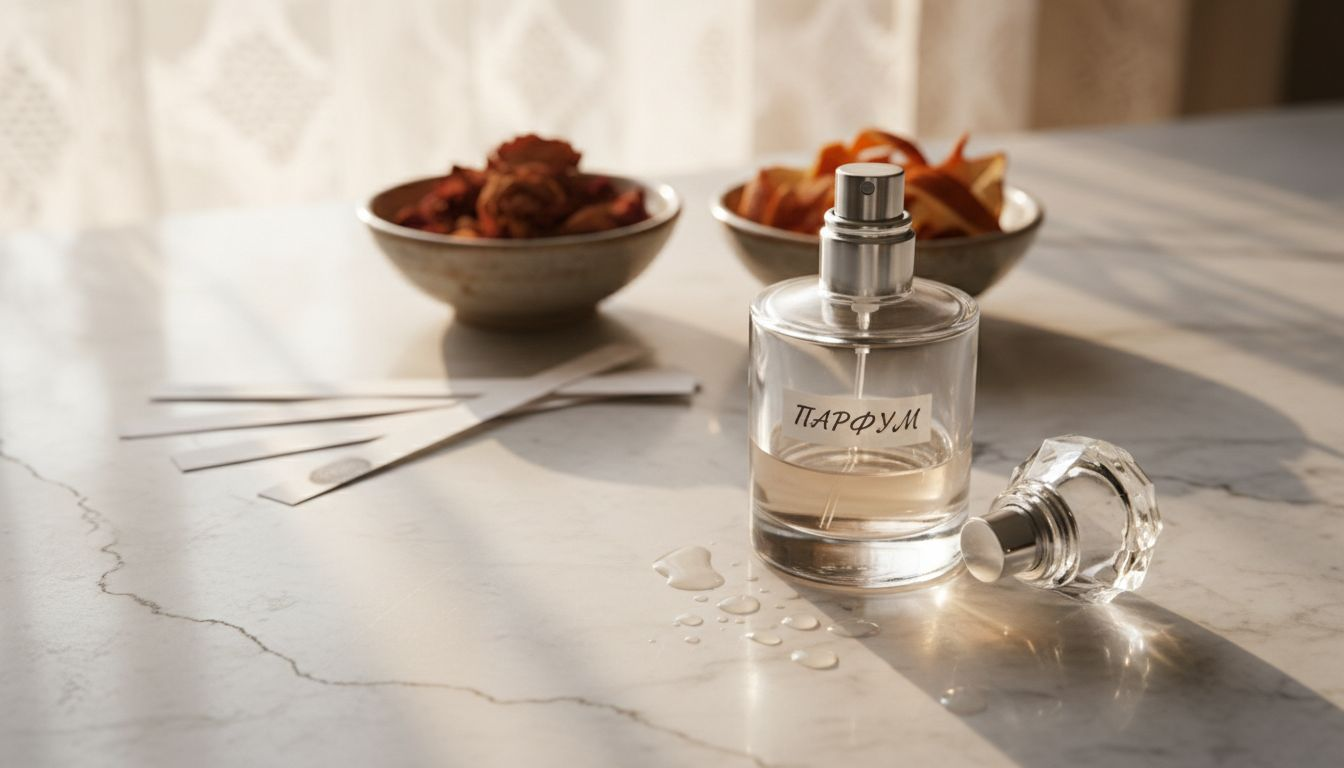
The strength and longevity of a perfume are directly influenced by the concentration of essential oils. The higher the percentage of perfume essences, the longer-lasting the fragrance will be. Professional perfumes contain between 20% and 40% concentrated ingredients, which allows them to retain their scent for up to 24 hours. Additional factors such as body temperature, skin pH level, and individual chemistry affect the final sensation and spread of the scent.
Pro tip - Testing longevity: Apply perfume to warm points on the body such as wrists, neck, and elbows, where blood circulation is more active and will help the fragrance unfold.
This table presents factors that affect the longevity of perfume on the skin:
| Factor | How it affects longevity | What to consider |
|---|---|---|
| Quality of ingredients | The purer, the longer-lasting | Choose premium raw materials |
| Concentration of oils | Higher concentration increases longevity | Perfumes are the most durable |
| Skin pH | Affects fragrance development | Variations possible for each person |
| Temperature and humidity | Heat amplifies the scent | Application to pulse points is recommended |
Role of ingredients and production technology
Perfume production is an extremely precise and complex process that requires deep knowledge in the fields of organic chemistry, aromatherapy, and aesthetics. The key role of ingredients begins with the careful selection of natural and synthetic components that will form the final fragrance.
Of paramount importance are essential oils, which are extracted from flowers, fruits, roots, and other natural sources. Why people fall in love with smells, not faces reveals the psychological depth of scent perception, further emphasizing the importance of precise selection.
Production technology includes several critical stages. First, ingredient extraction is performed using various methods such as steam distillation, cold pressing, or solvents. This is followed by the precise blending of components, where perfumers create unique combinations with top, middle, and base notes. Modern technologies allow for extreme accuracy in blending, which ensures consistency and quality of the final product.
Pro tip - Understanding ingredients: Learn to recognize the basic essential oils and their characteristics so you can evaluate the quality of perfumes more professionally and informatively.
Common mistakes when choosing perfume online
Shopping for perfumes online presents a number of challenges that can lead to an incorrect choice. The first common misconception is related to perceiving price as the sole indicator of quality, which is far from the truth. Perfume myths show that expensive perfumes are not always a guarantee of better quality.
A second common mistake is the lack of understanding of the different types of perfume concentrations. Consumers often confuse perfume, eau de parfum, eau de toilette, and cologne, without realizing that each of these options has a different intensity and duration of scent. It is important to know the characteristics of each type to make an informed choice that suits personal preferences and the occasion for which it will be used.
A third significant mistake is the inability to truly test the scent before purchasing. Online shopping lacks direct contact with the perfume, which can lead to disappointment. Therefore, it is advisable to read detailed descriptions, research reviews from other users, and, if possible, order samples or smaller volume packages before investing in a full bottle.
Pro tip - Safe online shopping: Before purchasing perfume online, always check the return and exchange policy to correct any errors in your choice.
Discover the true quality of perfume with Pheromante®
Recognizing perfume quality can be a challenge, especially when looking for long-lasting and magnetic fragrances with a high percentage of perfume oils. The article emphasizes the importance of proper composition and concentration, as well as the importance of personal chemistry in choosing a fragrance. If you want to experience scents that not only stay on your skin for hours but also boost your confidence and attractiveness, we at Pheromante® are here to offer carefully selected products of proven quality.
Visit Pheromante® Collections | Long-lasting and Magnetic Fragrances to discover a selection of niche pheromone perfumes combining intensity and sophistication. Our fragrances are created with attention to the finest ingredients to ensure maximum longevity and an impactful experience. Don't let chance determine your scent; immerse yourself in the world of high-quality perfumes with Pheromante.com and feel the power of your preferred scent today.
Turn perfume selection into your secret to success and confidence with our exclusive offers. Order now and benefit from guaranteed quality, free shipping, and the option to return.
Frequently Asked Questions
How can I recognize the quality of a perfume?
The quality of a perfume is recognized by its fragrance composition, the concentration of perfume ingredients, and the origin of the raw materials. High-quality perfumes usually have a complex structure with a clear distribution of top, middle, and base notes.
What does the concentration of perfume ingredients mean?
The concentration of perfume ingredients determines the intensity and longevity of the fragrance. Perfumes with a high concentration (20%-40% oils) are the longest-lasting, while colognes contain much lower percentages (2%-4%) and fade quickly.
How can I test a perfume for quality before purchase?
The best way to test a perfume for quality is to apply it to your wrist and wait 30 minutes. This allows the fragrance to develop with your body chemistry and temperature.
What are the main types of perfumes and their characteristics?
The main types of perfumes include cologne (2-4% oils), eau de toilette (5-15% oils), and perfume (20-40% oils). Each type has a different intensity and is suitable for different occasions.