


History of Niche Perfumery: Influence and Development

Every second young person in Central Europe admits that choosing a perfume is crucial for self-confidence and success in social settings. In an era where originality stands out from the crowd, niche perfumery offers not just a unique scent, but a true experience. Here, you will discover how unique fragrances emphasize personality and become your emblem among dynamic European youth.
Contents
- What distinguishes niche perfumery
- Key stages in historical development
- Main categories and styles of scents
- Influence on social attractiveness
- Comparison with mass-market perfumery
Key Takeaways
| Point | Details |
|---|---|
| Niche Perfumery | Niche perfumes offer unique scents that differ from mass production in individuality and quality. |
| Historical Context | Niche perfumery is a result of the search for authenticity and an artistic approach, emerging at the end of the 20th century. |
| Scent Categories | A variety of styles, such as oriental, woody, and gourmand, offer unique emotional messages. |
| Social Impact | Niche perfumes highlight individuality and enhance the wearer's social presence. |
What distinguishes niche perfumery
Niche perfumery represents a specific world of aromatic experiences that fundamentally differs from mass-market perfume offerings. Unlike commercial fragrances, niche perfumes are distinguished by exceptional individuality and artistic expression.
The main characteristics of niche perfumery include:
- Limited production runs
- Focus on the exceptional quality of ingredients
- Experimental and bold compositions
- Strong emphasis on individuality
These perfumes are created by small creative brands that view fragrances as a form of art, not just a cosmetic product. Niche perfumery tells stories, evokes emotions, and stimulates the senses in a way that mass-market perfumes rarely achieve.
Pro tip for connoisseurs: Choose a niche perfume that reflects your individuality and evokes strong emotional associations, rather than following momentary commercial trends.
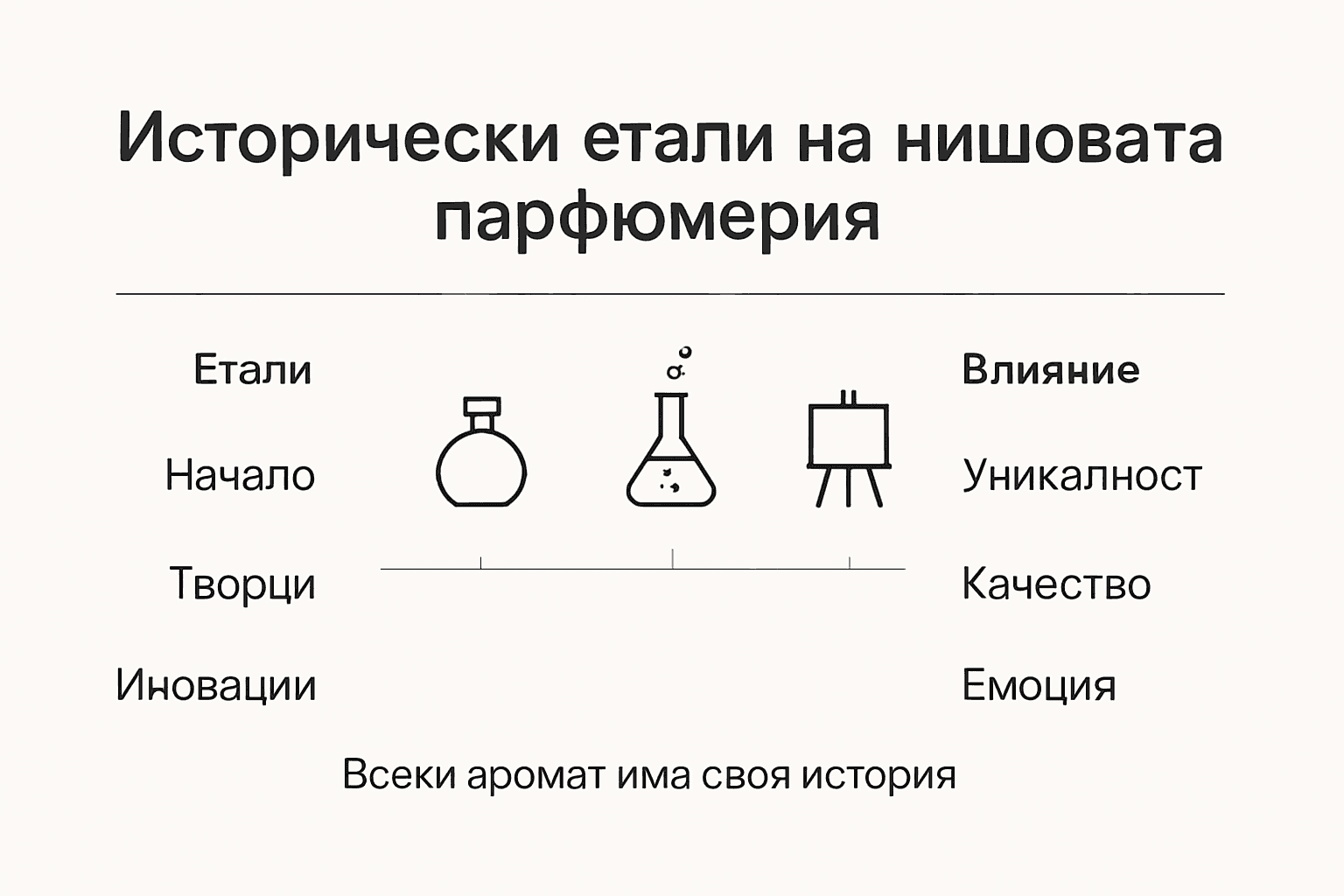
Key stages in historical development
The history of perfumery is rich and multifaceted, with niche fragrances emerging as a distinct segment only towards the end of the 20th century. Before that, exclusive perfumes were the privilege of the aristocracy, created by master perfumers with exceptional skills and creative flair.
Key historical stages include:
- Ancient civilizations - the first ritual and essential oils
- Arab innovations in fragrance distillation
- Spread during the Crusades
- Flourishing of royal perfumery traditions in Europe
- Industrial revolution and mass production
Modern niche perfumery emerged as a reaction against commercialization, attempting to restore authenticity and individuality to the world of fragrances. Independent brands like Serge Lutens and Diptyque began to break standard perceptions, transforming perfume into a true artistic experience.

Pro tip for connoisseurs: Trace the history of each niche perfume, because behind every scent lies a deep philosophy and a unique creative concept.
Main categories and styles of scents
Niche perfumery offers an exceptionally rich palette of aromatic categories that go beyond the standard classifications of commercial perfumes. Each fragrance represents a unique artistic composition that reveals different aesthetic and emotional messages.
The main categories of niche fragrances include:
- Oriental: Rich, warm, and sweet compositions with notes of incense, vanilla, and spices
- Woody: Emphasis on natural woody essences like sandalwood, cedar, and patchouli
- Gourmand: Aromatic compositions reminiscent of nuts, chocolate, caramel, and other culinary delights
- Green: Fresh, light fragrances with vegetal and herbal accents
- Leather: Intense, masculine compositions with notes of leather and tobacco
Each of these categories possesses its own philosophy and aesthetics, which transcend simple scent and become an emotional message. Niche perfumers experiment boldly, creating unexpected combinations that stimulate the senses and expand perceptions of classic perfumery.
Here is a summary comparison between key styles of niche fragrances:
| Scent Category | Typical Notes | Emotional Impact | Suitable for |
|---|---|---|---|
| Oriental | Incense, vanilla, spices | Warmth, romance, mysticism | Evening events |
| Woody | Sandalwood, cedar, patchouli | Confidence, stability, tranquility | Office, daily use |
| Gourmand | Chocolate, caramel, nuts | Treat, coziness, playfulness | Sweet surprises |
| Green | Herbs, green leaves | Freshness, energy, lightness | Spring days |
| Leather | Leather, tobacco | Strength, extravagance, originality | Artistic occasions |
Pro tip for connoisseurs: Don't stick strictly to established categories, but experiment with fragrances that reflect your individuality and evoke strong emotional associations.
Influence on social attractiveness
Niche perfumes represent more than just a simple scent - they are a means of expressing personality and social presence. Their uniqueness lies not only in their composition but also in their ability to create an unforgettable first impression.
The social impact of niche perfumes can be divided into several key aspects:
- Authenticity: Highlighting individuality
- Self-confidence: Boosting inner assurance
- Communication: Non-verbal message to the environment
- Differentiation: Standing out among mass-market fragrances
The emotional depth of these perfumes is expressed in their ability to provoke spontaneous reactions and interest. They don't just smell – they tell a story, awaken memories, and create invisible but strong social connections.
Pro tip for self-affirmation: Choose a niche perfume that reflects your inner essence and makes you feel authentic and confident in various social situations.
Comparison with mass-market perfumery
Niche perfumes represent a profoundly different approach to the art of fragrance compared to mass production, relying on individuality and artistic expression.
The main differences between niche and mass-market perfumery include:
- Production: Handcrafted versus industrial production
- Quantity: Limited editions versus mass production runs
- Ingredients: High-quality, natural ingredients versus standardized components
- Creativity: Experimental compositions versus predictable fragrances
- Price: Higher value due to uniqueness and quality
While mass-market perfumes target a wide market and follow current commercial trends, niche fragrances represent a true artistic exploration. They don't just smell – they tell deep, personal stories that evoke emotions and spontaneous associations.
Explore the differences between niche and mass-market perfumery in the following table:
| Aspect | Niche Perfumery | Mass-Market Perfumery |
|---|---|---|
| Creative Approach | Artistic, avant-garde | Standard, trend-oriented |
| Target Audience | Connoisseurs and enthusiasts | Wide consumer market |
| Type of Ingredients | High-class, unique | Generic, standardized |
| Impact on Image | Personal expression, authenticity | Following fashion trends |
Pro tip for aesthetes: Invest in a perfume that makes you feel special, instead of following mass trends that are the same for everyone.
Discover the World of Niche Perfumery with Pheromante®
The history and influence of niche perfumery show that uniqueness and authenticity are the key to expressing personality and confidence. If you are looking for a fragrance that highlights your individuality and gives you the power of social presence, then the collections of Pheromante® Collections | Long-lasting and Magnetic Fragrances are just for you.

Immerse yourself in the exclusive world of niche perfumes with pheromante.com. Choose a pheromone fragrance that not only smells but tells your personal story and makes you unforgettable. Visit our website now and discover the power of fragrance as a tool for confidence and attractiveness. Take control of the impression you leave and choose quality guaranteed by Pheromante.
Frequently Asked Questions
What is niche perfumery?
Niche perfumery is a segment of the perfume industry that offers unique fragrances with exceptional individuality and artistic expression, created by small creative brands.
What are the main characteristics of niche perfumes?
The main characteristics of niche perfumes include limited production runs, exceptional quality of ingredients, experimental compositions, and an emphasis on individuality.
What is the history of niche perfumery?
The history of niche perfumery began in the late 20th century as a reaction against mass commercialization, with independent brands striving to restore the authenticity and individuality of fragrances.
How do niche perfumes differ from mass-market ones?
Niche perfumes differ from mass-market ones in their handmade production, limited series, high-quality ingredients, and experimental creative approach, while mass-market fragrances often follow standard trends with unified ingredients.