


History of Pheromones: Influence and Significance Today

Choosing a perfume is often the first step towards a new sense of confidence and style, but what lies behind the magic of specific scents that evoke interest and desire? In modern Central European culture, many young men and women are looking for ways to highlight their individuality through niche pheromone perfumes. Pheromones, these specific chemical substances, have the ability to influence subconscious communication and spark spontaneous attraction according to scientific research. In this guide, you will discover how natural and synthetic pheromones change the role of scent in communication and how their use can affect your personal attractiveness.
Table of Contents
- What are Pheromones and Their Role
- First Scientific Discoveries and Development of Understanding
- Types of Pheromones and How They Work
- Pheromones in Human Relationships and Perfumes
- Myths, Reality, and Scientific Debates
Key Takeaways
| Point | Details |
|---|---|
| Pheromones and their role | Pheromones are chemical substances that play an important role in communication between living beings, triggering subconscious reactions. |
| Types of pheromones | There are different types of pheromones, such as sexual, alarm, and appeasing, each with unique behavior and effect. |
| Scientific research | Research on human pheromones is controversial, with unproven results and methodological weaknesses. |
| Pheromone perfumes | Pheromone perfumes aim to increase personal attractiveness, working on a subconscious level. |
What are Pheromones and Their Role
Pheromones are specific chemical substances that play an extremely important role in communication between living beings. Chemical signals between organisms represent a complex system for non-verbal information transfer that functions subconsciously and powerfully.
In different animal species, these chemical messages perform numerous functions - from sexual attraction to marking territories and warning of danger. In humans, pheromones act more subtly, but no less influentially. They activate subconscious reactions that can trigger a spontaneous feeling of attraction, trust, or interest in another individual.
The main characteristic of human pheromones is their ability to induce involuntary emotional and physiological changes. Invisible chemical signals can affect testosterone levels, mood, sexual desire, and even cause synchronization of menstrual cycles in women.
Professional tip: Understanding the nature of pheromones can improve your understanding of non-verbal communication and social interaction.
First Scientific Discoveries and Development of Understanding
The scientific history of pheromones began in the mid-20th century, when researchers took their first steps toward understanding these mysterious chemical signals. The term pheromone was introduced by Peter Karlson and Martin Lüscher in 1959, marking a starting point in the study of chemical communication between organisms.
The first notable scientific discovery was the identification of Bombykol in 1953 - the first animal pheromone discovered in female moths, which serves to attract mates. This moment marked a turning point in the understanding of invisible chemical interactions between living beings. Gradually, scientists began to investigate how different organisms use these chemical messages for communication, territorial marking, and reproductive purposes.
Despite the impressive discoveries in animals, scientific research in humans remains partial and controversial. Evolutionary biologists acknowledge that although human pheromones exist, their precise chemical composition and mechanism of action are still not fully understood. Modern science continues to explore this enigmatic field, using increasingly sophisticated methods of analysis.
Professional tip: Follow scientific publications and research that gradually reveal the secrets of human pheromones and their effects.
Types of Pheromones and How They Work
Pheromones represent a complex system of chemical messages that play different roles in human behavior and communication. Human pheromones include several main types, each with a specific biological function and effect.
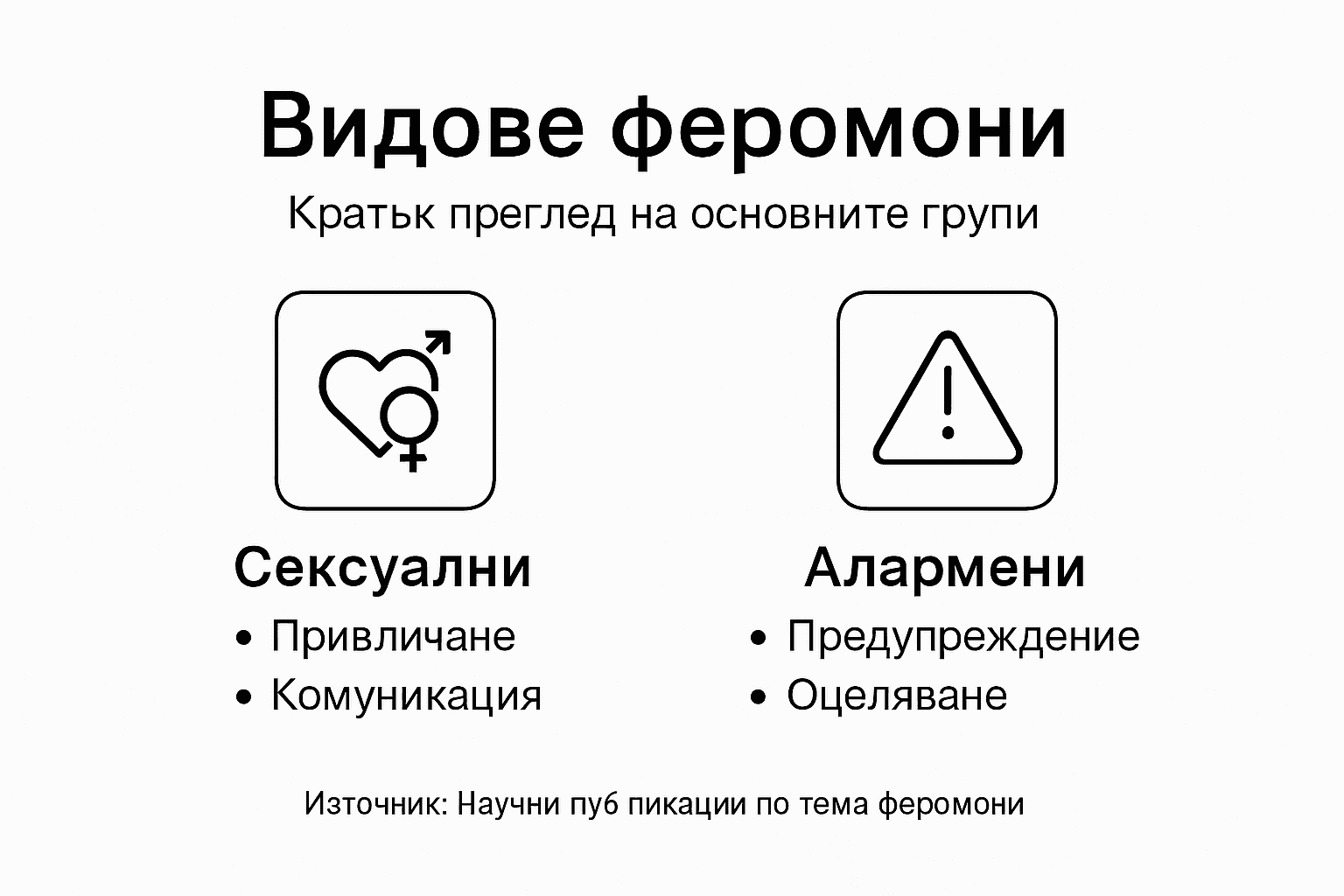
Sex pheromones are the most well-known and researched type, which trigger sexual attraction between individuals. They are secreted through sweat glands and skin, creating an invisible but powerful chemical signal that can evoke subconscious desire or interest. These pheromones play an important role in sexual behavior, supporting mate selection and the communication of genetic compatibility.

Another important type are alarm pheromones, which function as a warning system. They are released in response to stress or danger and can trigger an immediate reaction of fear or increased vigilance in other people nearby. Appeasing pheromones, on the other hand, have the opposite effect - they can reduce stress and create a feeling of calmness and trust in social interactions.
Professional tip: Pay attention to your natural pheromone profile and how it can affect your social and intimate relationships.
To better understand the role of different pheromones, see a comparison of the main types and their influence:
| Pheromone type | Main function | Behavioral effect |
|---|---|---|
| Sexual | Promotes attraction | Activates interest and desire |
| Alarm | Warns of danger | Provokes fear and vigilance |
| Appeasing | Reduces stress | Creates a feeling of trust and calmness |
Pheromones in Human Relationships and Perfumes
Perfumery opens a new horizon in the use of pheromones as a means of increasing personal attractiveness. Experimental research in perfumery shows that synthetic pheromones can enhance sexual attraction and social impact.
Modern pheromone perfumes represent an innovative product that aims to enhance the body's natural chemical signals. They are created by precisely blending synthetic pheromone components with traditional perfumery fragrance compositions, with the aim of achieving maximum effect on the subconscious of potential partners. These perfumes are designed to enhance natural attractiveness, working at the level of unconscious chemical communications.
An interesting aspect is that different pheromone compositions can evoke various emotional reactions - from increasing trust to creating a feeling of intimacy and closeness. Contemporary scientific research continues to explore how exactly these chemical compounds affect human relationships, with results varying among individuals.
Professional tip: Experiment carefully with different pheromone perfumes to discover the one that best highlights your individuality.
Myths, Reality, and Scientific Debates
The world of pheromones is filled with many misconceptions and erroneous ideas that require a critical scientific perspective. Evolutionary biologists emphasize the complexity and uncertainty surrounding the impact of human pheromones, warning against exaggerated expectations and marketing suggestions.
One of the most common myths is the idea that pheromones act as a magical solvent for sexual attraction. Scientific research shows that the reality is much more complex. Although there are chemical signals that can influence behavior, their effect on humans is far more subtle and individual than on other animal species.
Scientific research on human pheromones reveals extremely contradictory results. Most experiments suffer from methodological weaknesses, lack of systematic evidence, and inability to fully replicate results. Some scientists even question the existence of true human pheromones in the classical sense, as used in insects and other animals.
Professional tip: Be critical of claims about pheromones and look for scientifically based evidence, not emotional marketing suggestions.
The following table shows key scientific debates and realities surrounding human pheromones:
| Scientific question | Reality according to research | Most common misconceptions |
|---|---|---|
| Existence | Not fully proven | Believed to be universal |
| Effect on humans | Individual and unstable | Magical results are expected |
| Reliability of tests | Often contradictory data | Evidence is accepted without criticism |
Discover the power of pheromones with Pheromante®
The article “History of Pheromones: Influence and Significance Today” examines the complex role of pheromones as an invisible carrier of emotions and attraction. If you want to enhance your natural presence and impress with subconscious signals, Pheromante® offers unique Collections of Long-Lasting and Magnetic Scents with pheromones. These perfumes are specially created to boost your confidence and help you effectively communicate your essence without words.
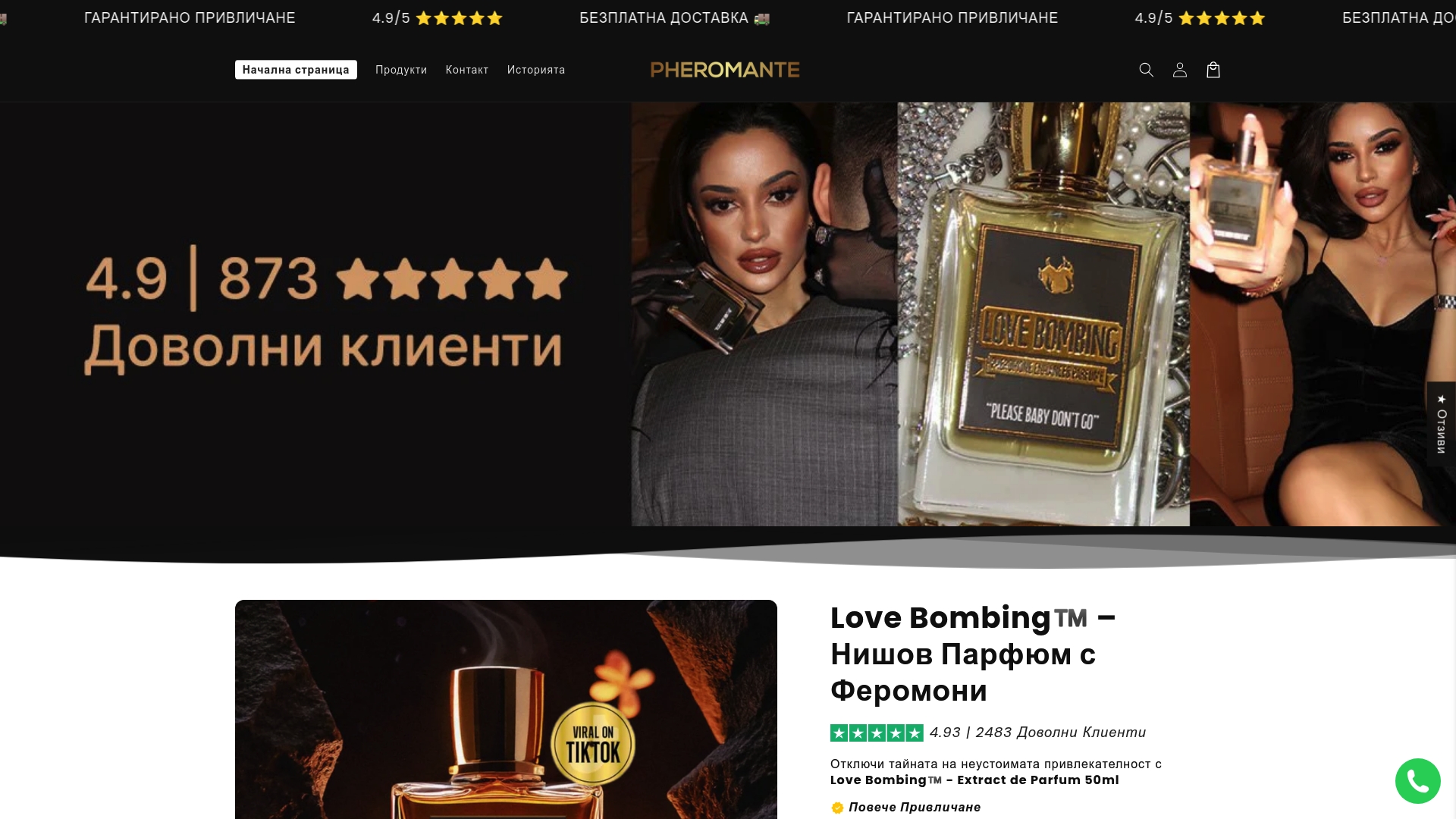
Don't wait for fate to decide for you. Enter the world of magnetic attraction now. Choose a scent from https://pheromante.com and take the first step towards a stronger social and emotional impact. Experience the power of pheromones with us and always be in your most attractive form.
Frequently Asked Questions
What are pheromones?
Pheromones are chemical substances that serve as chemical signals between living organisms, playing a role in communication and attraction.
What types of pheromones exist in humans?
In humans, the main types of pheromones include sexual pheromones, alarm pheromones, and appeasing pheromones, each with its biological function.
How do pheromones affect human relationships?
Pheromones can trigger involuntary emotional and physiological reactions that influence attraction, trust, and interest between people.
Is it possible to enhance the effects of pheromones through perfumes?
Yes, there are perfumes that contain synthetic pheromones and aim to enhance the body's natural chemical signals, increasing personal attractiveness.