


EDT vs. EDP: Which one to choose and when

TL;DR:
- The difference between EDT and EDP is not only in longevity but also affects the character and notes of the fragrance. EDT contains 5–15% aromatic oils and emphasizes fresh top notes, while EDP with 15–20% highlights base accords and a longer-lasting experience. The choice depends on the season, situation, and your skin's reaction, with the right concentration accentuating individual style and preferences.
You stand in front of the shelf, reading the letters on the bottle: EDT, EDP, maybe Eau de Cologne. Most people choose by price or packaging, unaware that behind these three letters lies a fundamentally different olfactory experience. The difference between EDT and EDP is not just a matter of longevity. It affects the character, projection, and even which notes will dominate on your skin. The right choice between the two concentrations can turn an ordinary perfume into a signature, while the wrong one can make your favorite scent invisible after an hour.
Table of Contents
- Key Takeaways
- EDT vs. EDP: Technical Data
- How Concentration Changes the Scent Itself
- When to Choose EDT or EDP
- How to Test Properly
- My Perspective on EDT vs. EDP
- Find Your Niche Fragrance with Pheromante
- FAQ
Key Takeaways
| Point | Details |
|---|---|
| Oil Concentration | EDT contains 5–15% aromatic oils, EDP contains 15–20%, directly affecting longevity. |
| Note Character | EDT emphasizes fresh top notes, EDP unfolds heart and base notes with deeper accords. |
| Seasonal Choice | EDT is a better choice for summer and office, EDP is for cold weather and evening occasions. |
| Cost per Wear Hour | EDP is more cost-effective long-term, despite a higher initial price. |
| Skin Type | Dry skin absorbs faster; applying to moisturized skin extends longevity. |
EDT vs. EDP: Technical Data
The terminology Eau de Toilette and Eau de Parfum comes from French perfumery tradition and describes the concentration of aromatic oils dissolved in alcohol. EDT contains about 5–15% aromatic oils, while EDP ranges from 15–20%. Sounds like a small difference. It's not.
The lower concentration in EDT means more alcohol, which makes the initial burst more intense, but the scent fades faster. EDP starts softer, but after 30 minutes, once the alcohol evaporates, it leaves a denser and longer-lasting sillage.
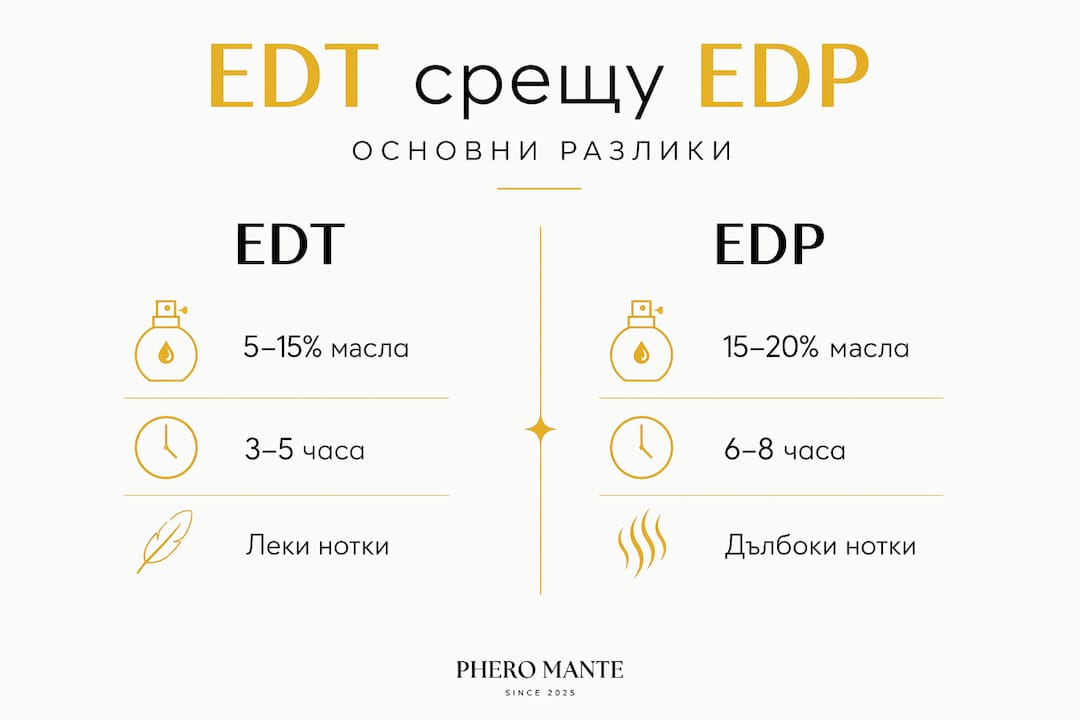
Here's a general overview of the differences:
| Indicator | EDT | EDP |
|---|---|---|
| Aromatic Oils | 5–15% | 15–20% |
| Longevity on Skin | 3–5 hours | 6–8 hours |
| Projection | Strong, fades quickly | Moderate, long-lasting |
| Recommended Use | Daily, office, summer | Evening, cold weather, special occasion |
| Price | Lower | Higher initial |
Important clarification: projection does not depend solely on concentration. The volatility of specific molecules, skin chemistry, and climate also play an equally important role. Some EDTs surprisingly have powerful projection, and there are EDPs that stay close to the skin almost intimately.
How Concentration Changes the Scent Itself
This is the point most people miss. EDT and EDP versions of the same perfume are not simply "diluted" and "concentrated" versions of the same thing. Formulations are re-tuned according to concentration.
EDT emphasizes top notes: citrus, aquatic accords, light spices. These are volatile and provide that unforgettable first contact. EDP, on the other hand, builds the body and base of the fragrance: wood, resins, vanilla, tobacco, leather. Deeper, darker, more provocative.
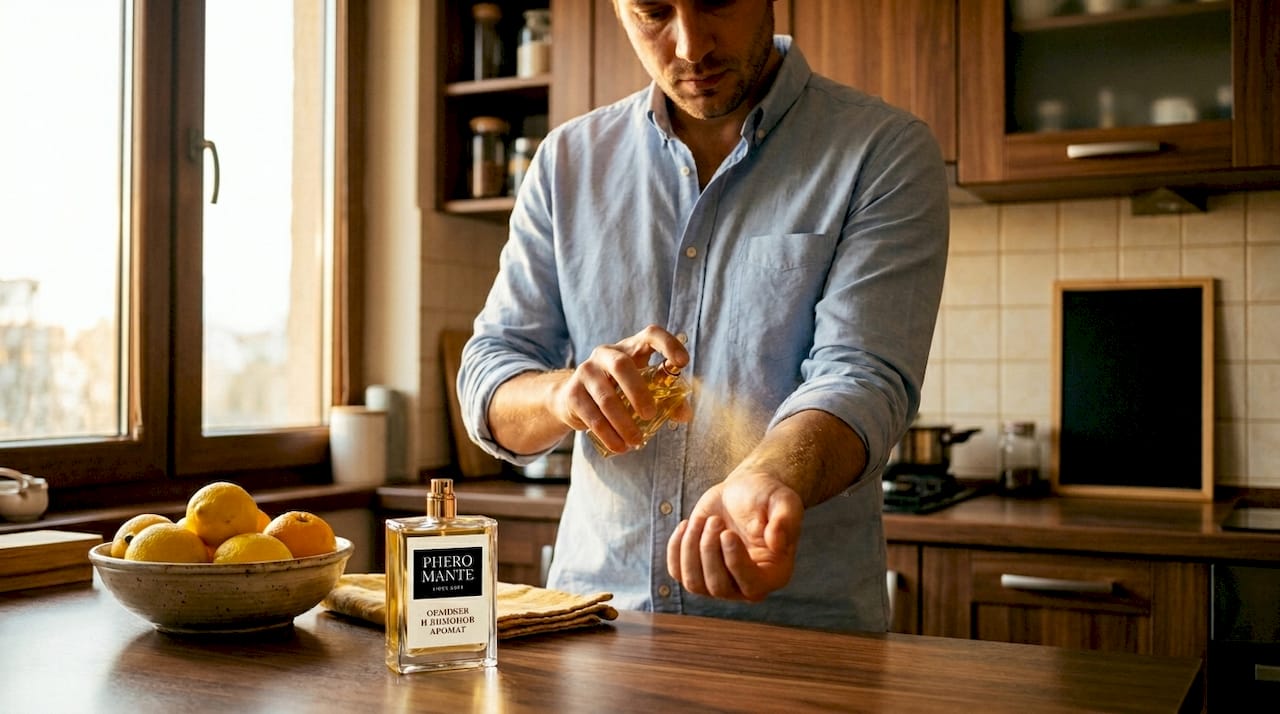
A good illustration is Dior Sauvage in both versions: the EDT version is fresh, citrusy, almost sporty. The EDP version is warmer, vanilla-like, with a more mysterious character. Technically it's "one perfume," but emotionally they are two different statements.
Consider Pheromante's niche fragrances in this framework:
- Love Bombing EDP uses cardamom, tobacco, and caramel precisely because the EDP format allows these heavy, gourmand notes to remain on the skin for hours, rather than disappearing after brunch.
- Capri Narcissist relies on Mediterranean freshness, which in EDT format would be felt more brightly and immediately, while the EDP version deepens the salty and woody finish.
Professional advice: If you love a fragrance for its top notes, EDT gives you exactly that. If you buy for the base and sillage, EDP is the only logical choice.
When to Choose EDT or EDP
The choice is not philosophical. It's situational. Here's how to think practically:
-
Summer and hot climate. EDT is more suitable for hot weather because your body heats up and intensifies the fragrance. EDP in 35 degrees can become aggressive and heavy.
-
Office and enclosed spaces. EDT is the more polite solution. You don't have the right to impose your sillage on your colleagues for eight hours. A fresh, delicate projection is a sign of olfactory etiquette, not weakness.
-
Winter and cold climate. Cold air "kills" light molecules. EDP provides enough concentration to manifest even under a thick scarf.
-
Evening occasions and dates. EDP is the obvious choice. You want a fragrance that is felt hours after you enter a room. Sillage is a message.
-
Skin type. Dry skin absorbs faster and reduces longevity. If you have dry skin, EDP compensates for this loss. Oily skin retains fragrance longer, making EDT a perfectly sufficient choice.
-
Economical. EDP is more cost-effective based on price per hour of wear, despite the higher initial price. If you apply less due to concentration, the bottle lasts longer.
Professional advice: Moisturize your skin before applying perfume. A neutral, unscented lotion doubles the longevity of any concentration, EDT and EDP.
How to Test Properly
Testing in a store is useful, but it's just the beginning. Only the initial spray on the wrist is misleading; the true character of a fragrance is revealed after hours.
Here's how to test more informatively:
- Apply and wait. Track the fragrance after 2, 4, and 6 hours. The top notes you smell in the store will disappear within an hour. What remains after four hours is the true scent.
- Test on different parts of the body. The wrist is classic, but the inner elbow or behind the ear offer different chemistry and warmth. Results can vary significantly.
- Monitor the temperature. Test in conditions similar to those in which you will wear the fragrance. Perfume in a cool store behaves differently under the summer sun.
- Do not test more than two fragrances simultaneously. Your nasal receptors become saturated and lose accuracy. Give yourself a 20-minute break between tests.
- Pay attention to application and ritual. How and where you apply influences almost as much as the concentration itself.
My Perspective on EDT vs. EDP
by Stoyan
I admit I had prejudices against EDT. I considered it a "lightened version" of a real perfume. I was wrong.
The truth is, the division of EDT versus EDP is less important than the question: which notes do you want to stand out? If a fragrance is built around a bright opening, EDT shows it in its best light. If it lives in the depths, in the base, in the dark accords of wood and resin, EDP is the only way to experience it fully.
The funny thing is that high concentration doesn't guarantee stronger projection. I have EDTs that enter the room before me, and EDPs that are an almost intimate whisper only for those close to me. The latter, honestly, I like more.
EDP is the "workhorse" concentration for most situations. A balanced choice between price, longevity, and experience. But if I'm on the beach or in a bustling summer cafe, EDT will be on my table. Context is everything.
Instead of asking "EDT or EDP?", ask "What moment do I want to create?" The answer to the second question automatically provides the answer to the first.
— Stoyan
Find Your Niche Fragrance with Pheromante
Pheromante creates fragrances, produced in Italy, with a clearly defined olfactory pyramid and a story behind each bottle.
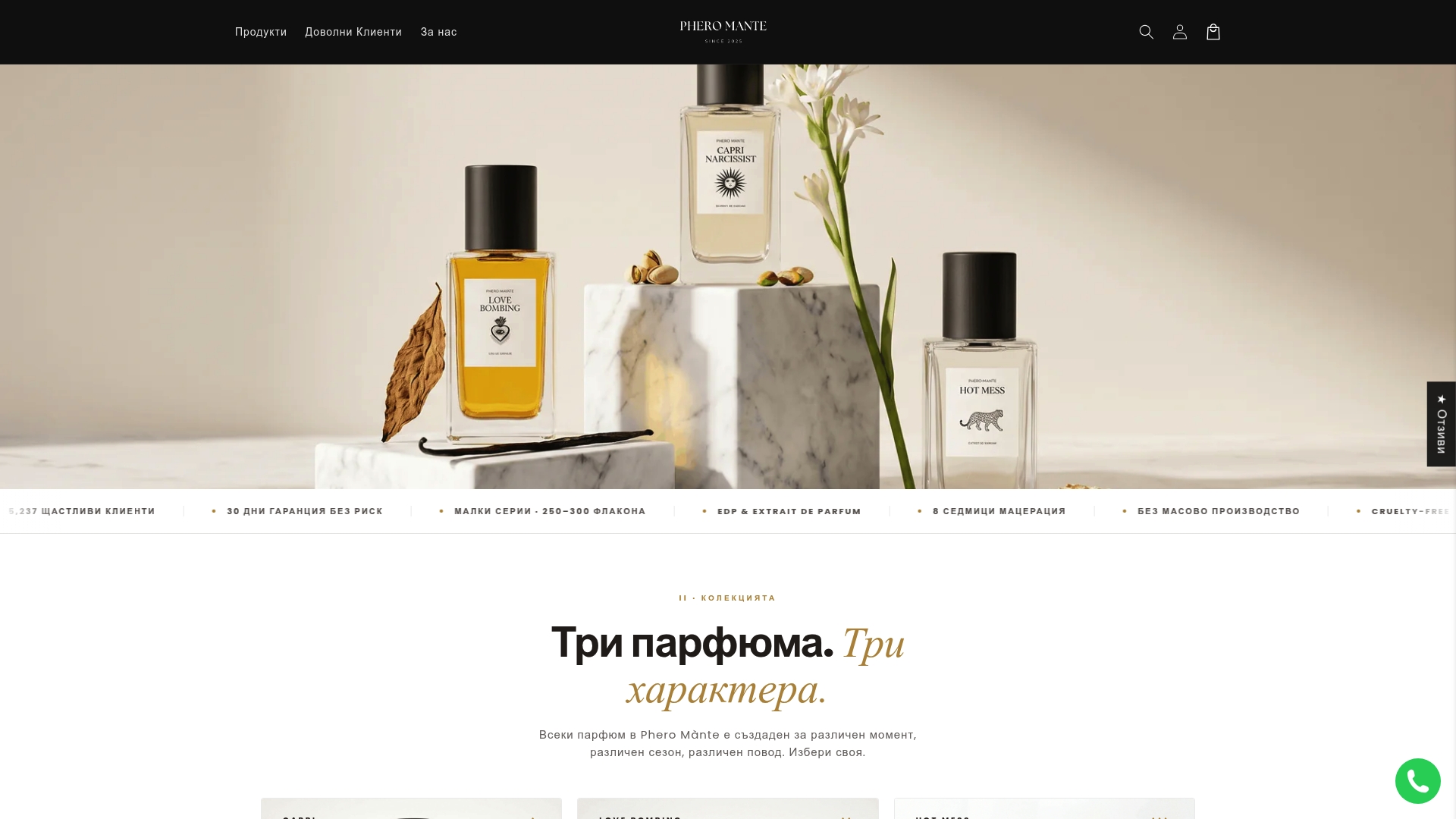
Love Bombing, Hot Mess, and Capri Narcissist are formulated as EDP precisely because smoky gourmand and source-driven compositions live in the base, not in the alcoholic burst of the opening. At €60 for 50ml EDP, you get niche perfumery at a fair price, not a synthetic mass-market fragrance in luxurious packaging. Browse Pheromante's full catalog and find the fragrance that speaks to your moment.
FAQ
What is the difference between EDT and EDP in terms of longevity?
EDT lasts about 3–5 hours on the skin, while EDP lasts 6–8 hours. The difference comes from the higher concentration of aromatic oils in the EDP format.
Can EDT smell stronger than EDP?
Yes. Some EDTs project stronger at the beginning due to the faster evaporation of alcohol, which disperses the molecules more aggressively. The strength of projection also depends on the type of notes, not just the concentration.
Which is better for the office: EDT or EDP?
EDT is the more polite choice for an office environment. The lower concentration provides a delicate sillage that doesn't overwhelm enclosed spaces and your colleagues.
How does skin type affect the choice?
Dry skin absorbs fragrance faster and reduces longevity, making EDP the better choice. Oily skin retains molecules longer, so EDT is a perfectly sufficient option.
Is Eau de Cologne weaker than EDT?
Yes. Eau de Cologne contains only 2–5% aromatic oils, making it the lightest concentration. It lasts 1–2 hours and is primarily suitable for freshness after a shower, not for all-day wear.